Ribs are one of those cooks where there’s no single “right” way to do it. Over years of smoking — and decades before I even owned a smoker — I’ve landed on four methods that all deliver genuinely great, tender, flavorful ribs. This guide covers how to smoke ribs all four ways, so you can pick the one that fits your equipment, your time, and what you’re in the mood for.
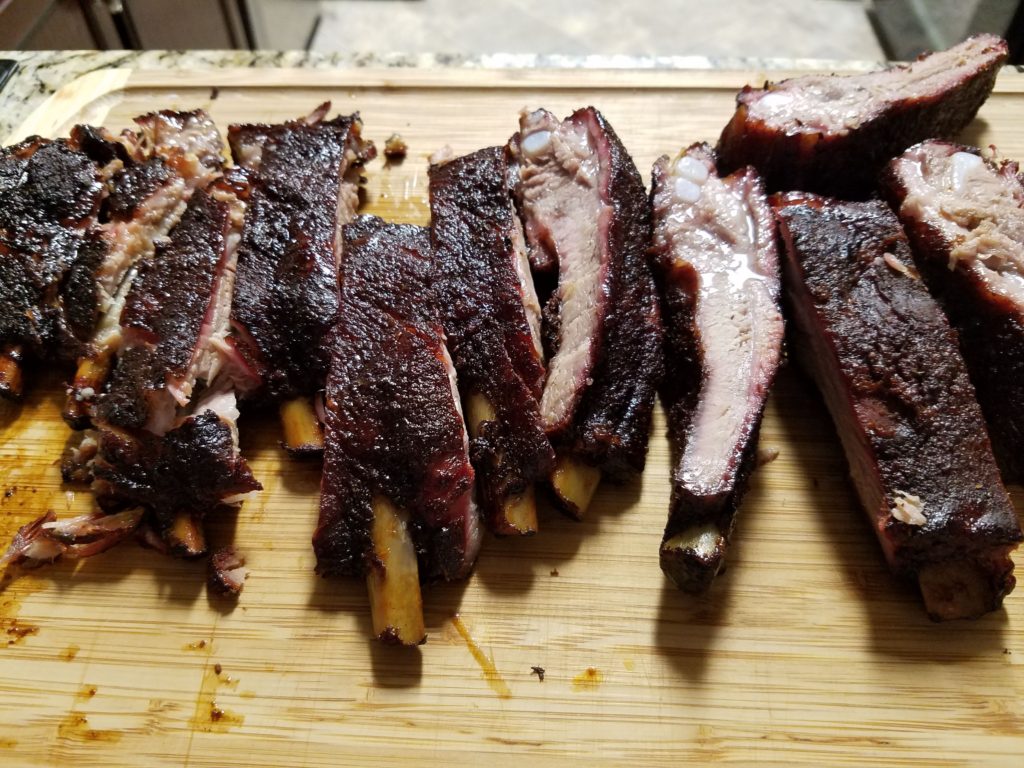
My Dry Rub for Smoked Ribs (Sprinkle and Shake)
I’m a sprinkle-and-shake guy, so there’s no measuring here. My rub is heavy on the garlic powder and paprika, with a small amount of black pepper and, more recently, a little salt. Depending on who’s going to be at the table, I sometimes add onion powder to the mix. I shake it over the ribs once the membrane is off (more on that below).
The whole rub at a glance:
- Garlic powder: heavy
- Paprika: heavy
- Black pepper: a small amount
- Salt: optional, a small amount
- Onion powder: optional, depending on the guests
About the salt: I went years without adding any and only recently started using a small amount, because I think it adds to the flavor of the finished ribs. I know it’s not the best thing health-wise, so leave it out if you’d rather. That’s how I made them for years.
How far ahead I season varies from cook to cook. Sometimes it’s a couple of hours before the ribs go on, and once it was about six hours ahead. Each method article below notes what I used on that particular cook, so you’ll see small differences. On one of them I used a store-bought Weber rub instead of my own mix.
Baby Back vs. St. Louis Ribs for Smoking
Most of what I cook is baby back ribs, though St. Louis style shows up in a few of these methods too. Baby backs are smaller and cook a bit faster; St. Louis style tends to run more fat and takes longer. Either works fine across all four methods below — just adjust your timing expectations based on which cut you’re using. Watch for sales; ribs are often discounted enough to make trying more than one method in a season an easy call.
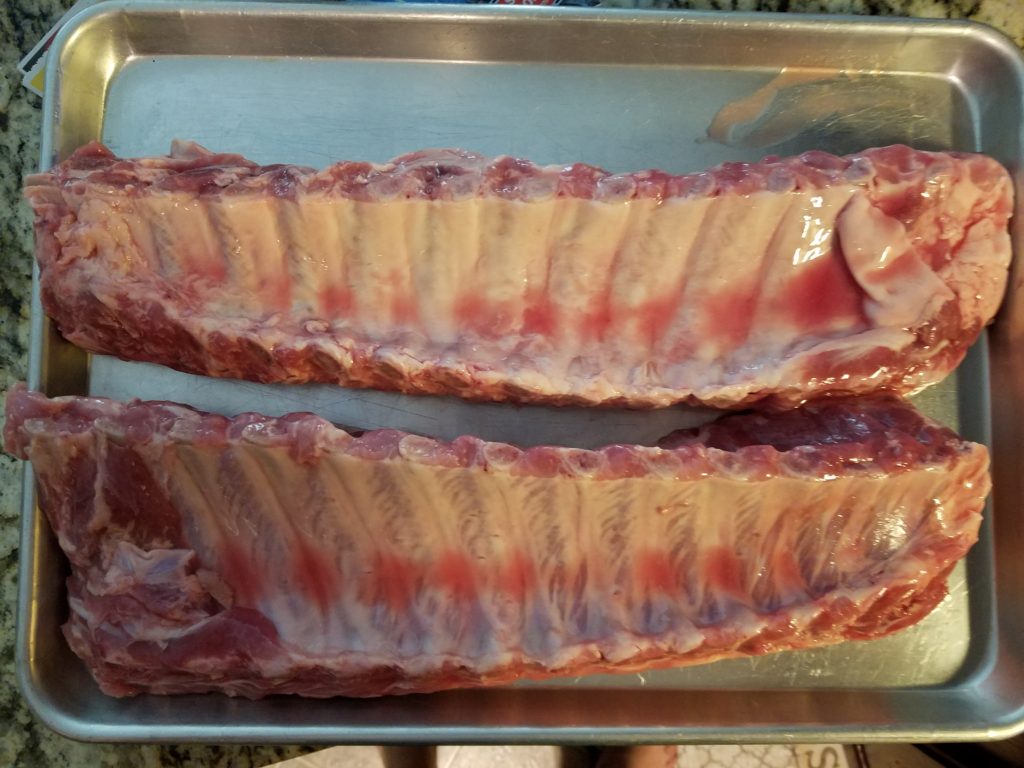
How to Remove the Membrane From Ribs
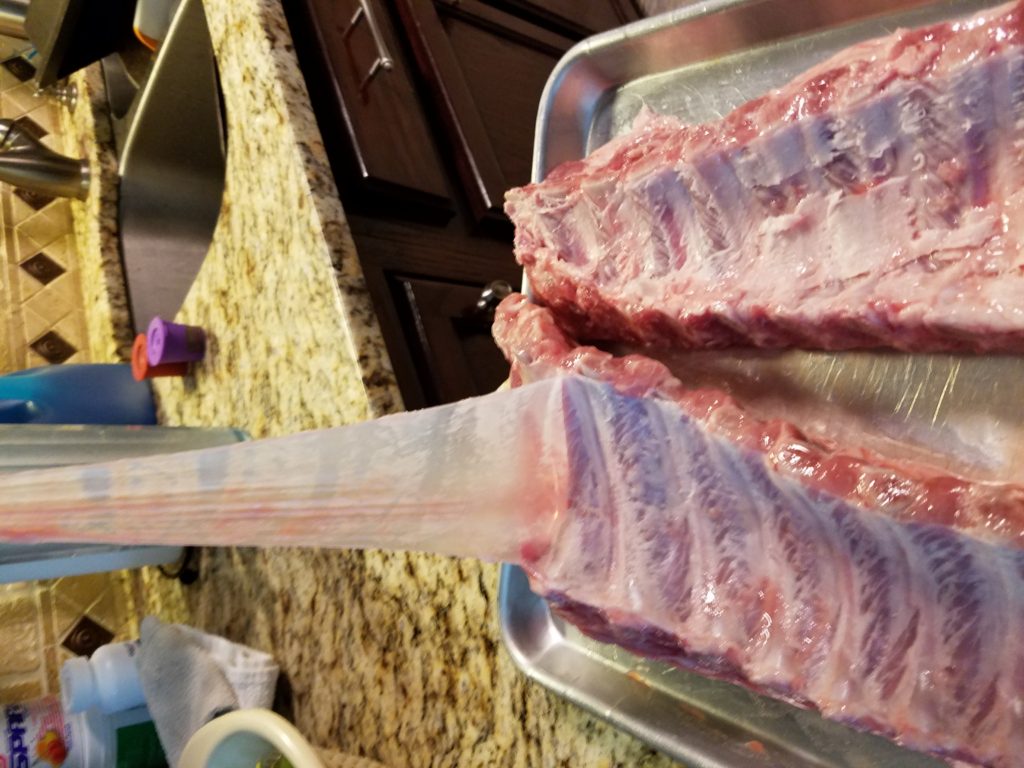
Every method here starts the same way: pull the membrane off the back of the rack. It’s a quick process — slide a butter knife under one end to get it started, then grab it with a paper towel and peel it off in one piece. Skipping this step leaves a tough, chewy layer between you and the meat, so it’s worth the extra minute no matter which method you’re using.
How to Set Up a Weber Smokey Mountain for Ribs
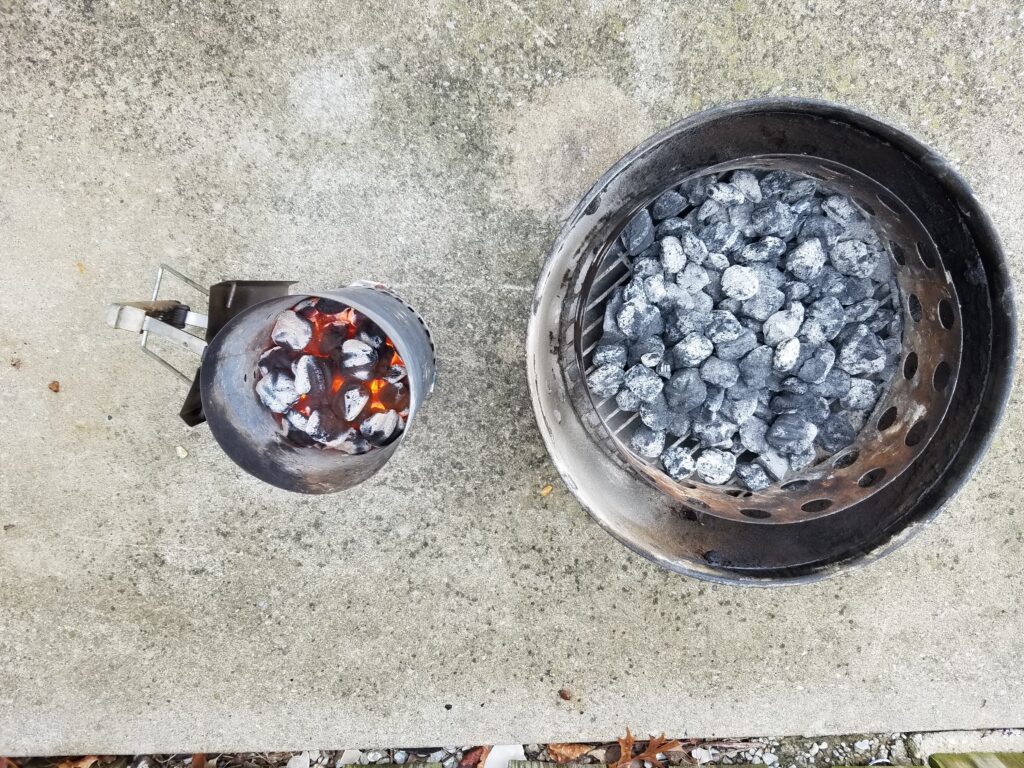
For every smoker method, I aim for 225°F. I’m not fussy about it — if the smoker drifts up to 250°F, that’s no problem. For wood, hickory is my go-to on pork ribs. Beyond that, a couple of setup habits carry across every method. The Weber Smokey Mountain gets its name from the water pan, and there’s real debate on whether to use it — on shorter smokes I leave it empty but cover it with foil to catch drippings and make cleanup easy; even when I do use water, I still foil the pan first, since cleaning it afterward otherwise takes way more time than it’s worth.
One more thing worth knowing if you’re just starting out: don’t light your chimney starter directly on concrete or patio pavers. The heat can cause the concrete to crack — or worse. I now always light on a propane grill instead.
How Long to Smoke Ribs at 225°F: 4 Methods Compared
| Method | Time | Equipment | Texture | Best For |
|---|---|---|---|---|
| No-Wrap | ~6 hrs | Smoker | Firmer bite, more bark | Bark lovers, hands-off cooking |
| 3-2-1 | ~6 hrs | Smoker + foil | Tender, fall-off-the-bone | Reliable go-to, most occasions |
| Hanging | 3-6 hrs (cut-dependent) | Smoker + rib hooks | Even cook, no flipping | Big batches, vertical smoker space |
| Oven | ~6.5-7 hrs | Oven + grill | Tender, charred finish | No smoker, year-round reliability |
To Wrap or Not to Wrap: The Four Methods
No-Wrap — Run the ribs straight through the whole cook with no foil at any point. The idea behind wrapping (in 3-2-1, below) is that it traps steam and helps prevent the ribs from drying out. Skipping it trades some of that tenderness for a firmer bite and more bark — good if you like your ribs with a little more chew and don’t mind a touch less moisture. Read the full No-Wrap Smoked Ribs post
3-2-1 — My default method and the one I come back to most: 3 hours in the smoke uncovered, 2 hours wrapped in foil (I add honey, brown sugar, and a splash of water to the wrap), then 1 hour back out to finish. The wrap stage steams the ribs, helping lock in moisture for that classic fall-apart tenderness. Read the full 3-2-1 Patio Ribs post
Hanging — Instead of laying ribs flat on the grates, hang them vertically using rib hooks so heat and smoke circulate around the whole rack. This method lets you fit far more ribs into one cook — I’ve hung 3 racks at a time, but I’ve seen others hang 10-12 in a single WSM. Timing depends heavily on cut: St. Louis style ran 4.5-6 hours for me, while baby backs finished in 3-3.5 hours. Always add a safety grate underneath in case a rack slips off the hook. Read the full Hanging Ribs post
Oven — This is actually the method I used for decades before I ever owned a smoker, going back nearly 40 years to a technique I picked up from a restaurant called Gadgets in the 1980s. Bake low and slow at 225°F for about 6 hours in a covered pan with sliced onion for moisture and separation, plus a splash of liquid smoke for flavor. Finish with a quick 10-15 minutes on a hot grill for real char and caramelized sauce. No smoker required, and the results hold their own against anything off the smoker. Read the full Oven-Baked Baby Back Ribs post
How to Tell When Ribs Are Done
Regardless of method, I go by feel and look, not a thermometer — I’ve never temped a rack in 45 years of cooking, and I don’t think you need to. The meat should have pulled back slightly from the bone ends, and when you lift a rack from one end, it should bend and the surface should start to crack without the rack falling apart entirely. That bend test has always been enough to tell me when they’re ready.
How to Smoke Ribs: Frequently Asked Questions
Do I need a smoker to make good ribs? No — the oven method proves that out. It’s genuinely one of the four legitimate paths to great ribs, not just a fallback.
Does wrapping actually prevent ribs from drying out? That’s the theory behind the 2-hour foil stage in 3-2-1 — trapping steam to help retain moisture. In my experience running both wrapped and unwrapped versions, the wrapped ribs do come out more tender and juicy, though I wouldn’t say it’s an ironclad rule every single time.
Which method should I start with if I’ve never smoked ribs before? 3-2-1 is the most forgiving and predictable — I’d start there before branching into no-wrap or hanging.