Ten Years of Cold Smoked Cheese
I’ve been making cold smoked cheese three or four times a year for about a decade now — somewhere around 30 to 40 sessions at this point. It started small, a dozen sticks at a time, mostly trial and error. It’s grown into something bigger: batches of 36, three rounds every Christmas, and a list of family and friends who now expect a package to show up in the mail. This guide is everything I’ve learned along the way — what works, what doesn’t, and the mistakes that taught me the difference.
What Temperature Is Best for Cold-Smoking Cheese?
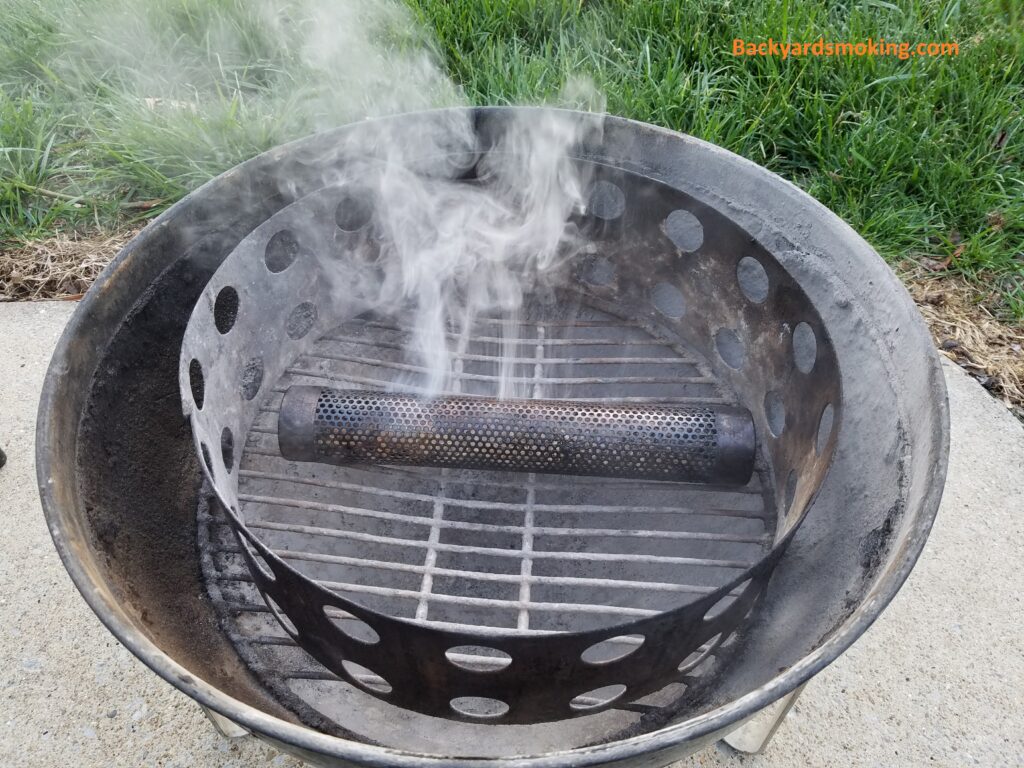
There’s no smoker temperature to set. Cold smoking means smoke without heat. The pellet tube is the only thing in the smoker, and once it’s lit, the pellets smolder — giving off steady smoke with no flame and little or no heat until they burn out. The only time I’ve seen a flame is right after lighting, when the tube first goes into the smoker. A quick spray from a water bottle knocks it back to a smolder (here’s the smoke where I had to do exactly that). Give it a brief check at the start, then let it roll. Beyond that, what you’re managing is the outside air: below 50°F is ideal, keep the smoker out of direct sun, and use an ice pan so the cheese stays cool and firm.
Temperature control matters more than the calendar. Cool weather — below 50°F — is ideal and makes the whole process more forgiving. But temperature isn’t just about the air: a black smoker sitting in direct sun can pick up enough heat to start melting cheese even on a cold day. Position your smoker out of direct sun when you can, and don’t assume a cold day alone protects you.
What Cheese Is Best for Smoking?
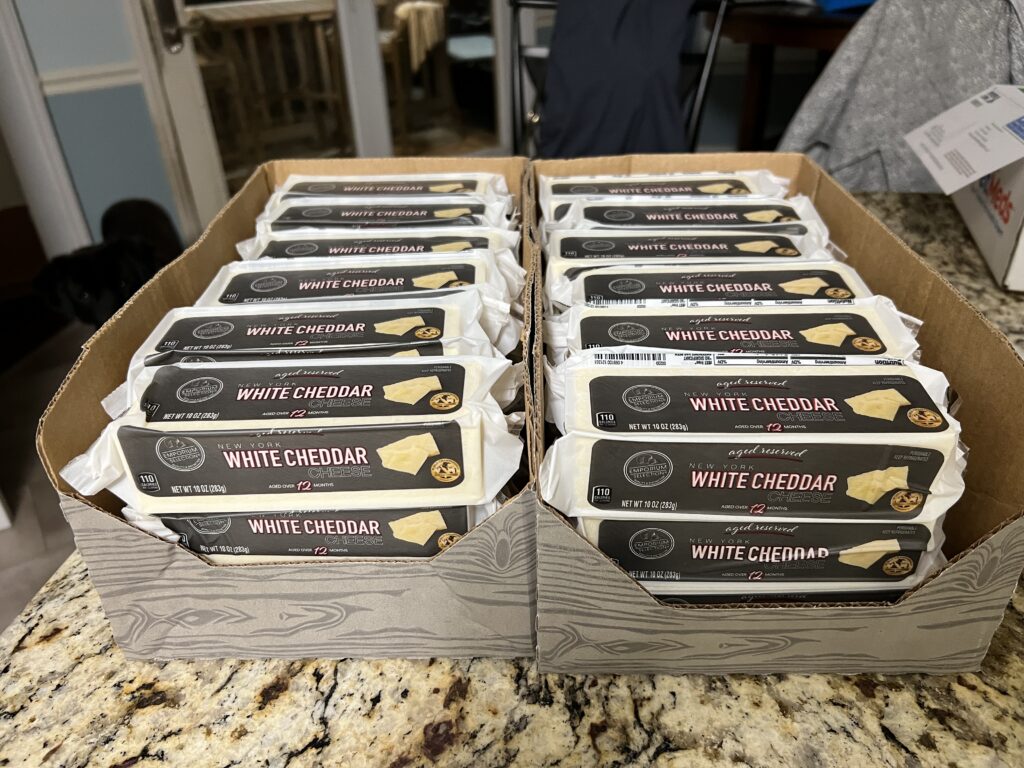
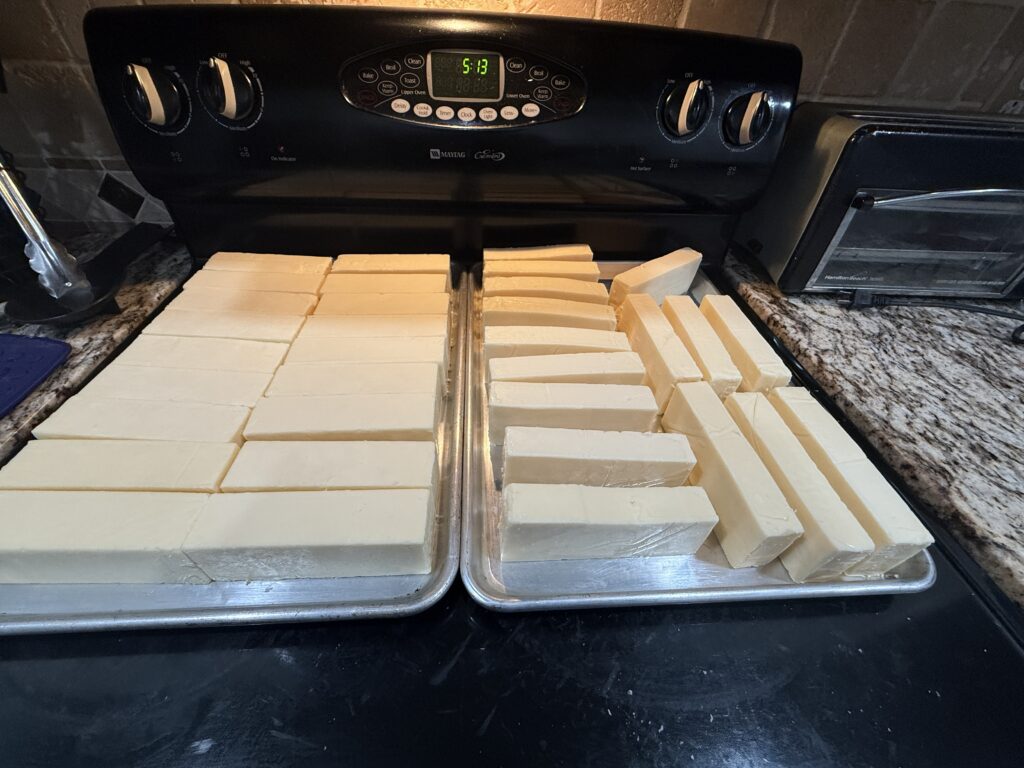
White cheddar is my favorite, but I’ve smoked sharp cheddar, Colby jack, pepper jack, Gouda, Swiss, and Gruyère with good results. One advantage of the 10 oz white cheddar bars I buy (like the Emporium Selection New York White Cheddar shown above) is that they come pre-sized and uniform — no cutting needed, and every piece smokes evenly since they’re all the same size to start. If you’re working from a large block instead, you’ll need to cut it down yourself, and that usually means less consistent sizes, which can smoke unevenly. Aldi’s aged white cheddar sticks became a longtime favorite too, especially when I could find them for $2.49 each.
How to Cold Smoke Cheese in a Weber Smokey Mountain
I use an Amazen pellet tube smoker, loaded with wood pellets, set in the bottom of a Weber Smokey Mountain with no charcoal or heat source — the tube is the only thing producing smoke. Getting the pellets lit is the trickiest part: you want them smoldering, not flaming. The most reliable way I’ve found is lighting the tube directly on a gas grill (I keep an old decommissioned Weber around just for this) for 3-5 minutes before moving it to the smoker.
How to Keep Cheese From Melting in the Smoker
Fill the WSM’s water pan with ice, not water, to help hold the internal temperature down during the smoke. This matters even on cold days — sun exposure on the smoker body can undo what the outside temperature would otherwise handle for you. Skipping the ice pan is the single mistake that’s caused me the most trouble.
Best Wood Pellets for Smoking Cheese
I’ve successfully used cherry, oak, and hickory pellets on cheese. I ran a side-by-side test early on comparing cherry and oak, but never wrote down which one came out ahead — a lesson in documenting as you go. Lately I’ve been smoking my cheese with hickory. Full story on that early test, and why I switched: Why I Switched to Hickory Pellets for Cold-Smoked Cheese.
How Long to Cold Smoke Cheese
Most of my smokes land in the 3-4 hour window, or however long a full pellet tube burns. That’s the sweet spot for smoke flavor without tipping into bitterness.
How Long to Let Smoked Cheese Rest (and How to Store It)
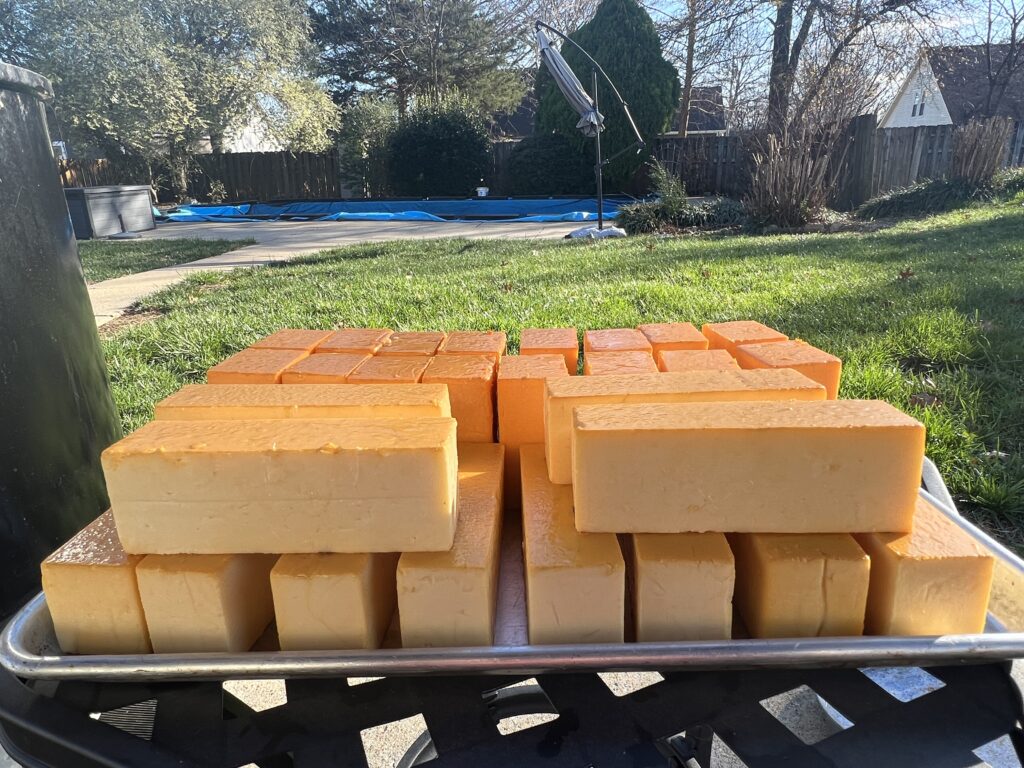
Rest it about an hour uncovered, then vacuum seal it and give it at least 3 weeks in the refrigerator before eating. Straight off the smoker, cold-smoked cheese is overwhelming — if you tasted it right away, it would taste like you licked an ashtray. Let it rest for about an hour, uncovered, before sealing (a cool oven works well for this). Wipe off any oil that’s come to the surface. Then vacuum seal, label with the date, and refrigerate.
The real transformation happens over the following weeks. I’ve found 3 weeks minimum before the smoke mellows and gets absorbed evenly through the cheese — some batches I’ve let go closer to 4 weeks. I don’t judge the final flavor early — tasting it right off the smoker is part of how I learned what actually happens during the rest.
How Much Cheese Fits in One Smoke
Early on, I was smoking around 12 sticks per batch. Over the years, as the tradition grew, so did the batch size — I now regularly smoke 36 sticks at once.
How to Smoke 36 Sticks of Cheese at Once
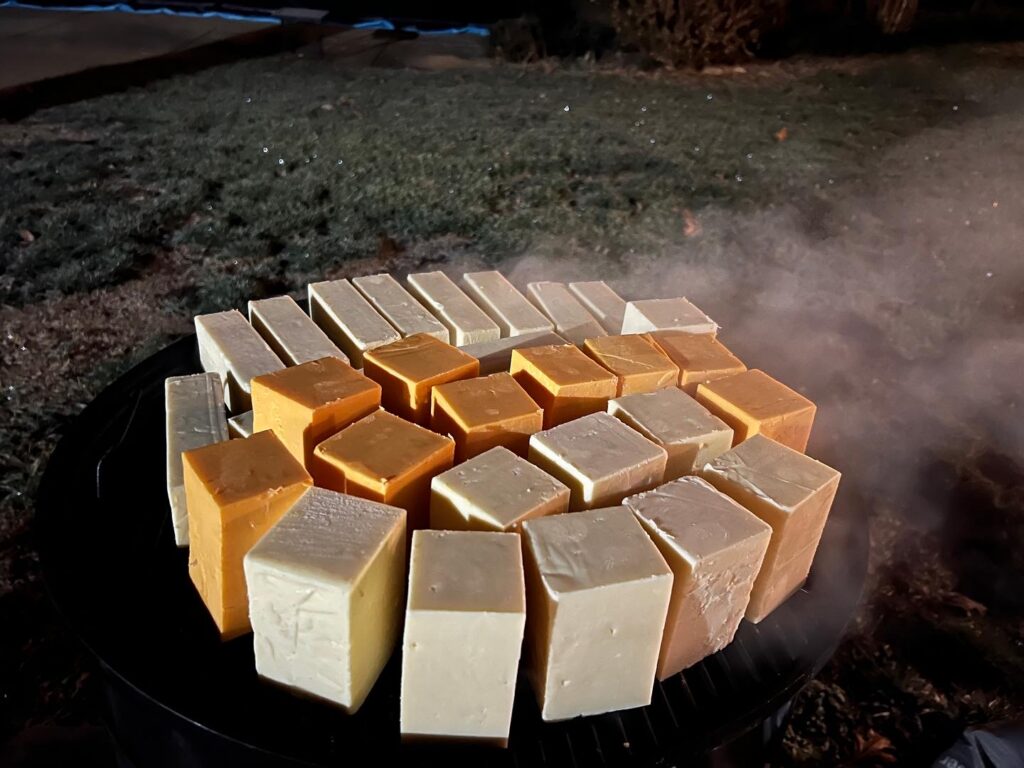
In the beginning, I rotated the cheese during the smoke. After doing this for years, I stopped giving rotation much thought. I load 36 sticks across the top and bottom grates of my 22″ Weber Smokey Mountain, making sure none of them touch, light the pellet tube, and let it work. If the smoke runs four hours, great. Three hours is fine, and even two and a half hours produces good results. This process is far more forgiving than I once thought.
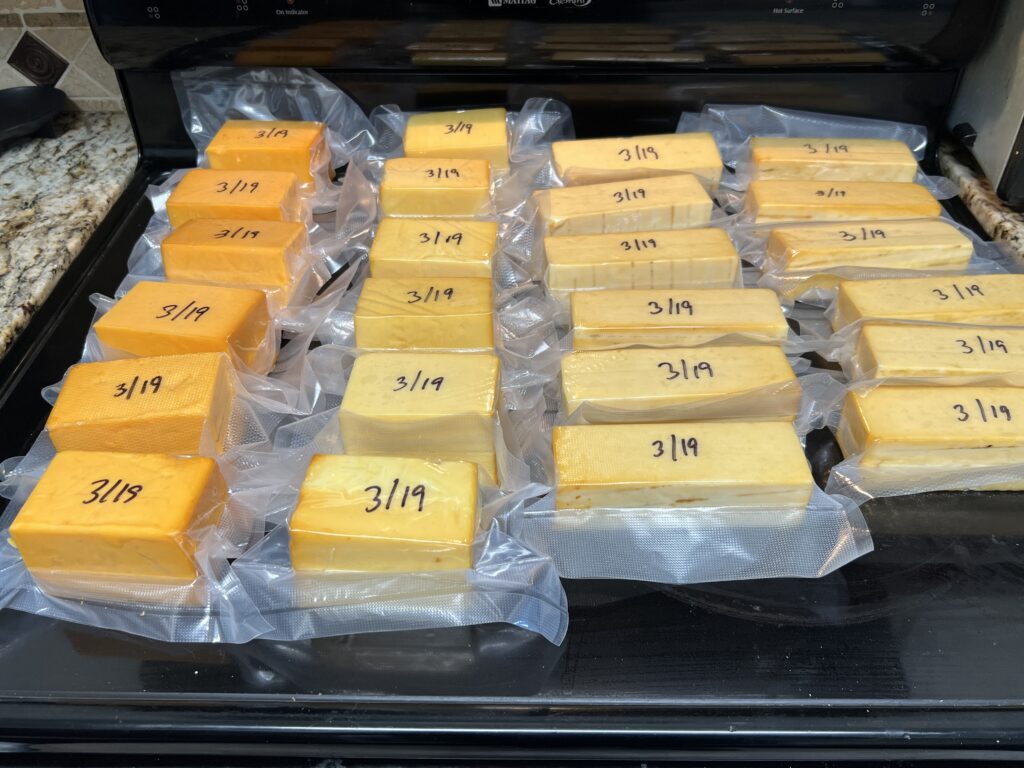
For years, sealing was the part that took real effort. I vacuum sealed with custom-cut FoodSaver bags, double-sealed on both ends — for a 36-stick batch, that’s 144 seals in one sitting. It was tedious, occasionally nerve-wracking, and not something I’d call quick. But it’s why failures were rare, and why, in my experience, properly vacuum-sealed and continuously refrigerated cheese has kept for up to a full year.
Switching From a FoodSaver to a Chamber Vacuum Sealer
I used a FoodSaver for more than 10 years, buying rolls and making my own bags, and I never completely trusted it. That’s why every bag got double-sealed on both ends: cut the bag, seal the bottom twice, load the cheese, seal the top twice. After that many years I could tell by the sound when a seal wasn’t going to take, so I’d cut the end off and redo it. The bigger headache was getting the machine to engage at all. I’d pull the bag out, bend the end, reinsert it, and try again, sometimes several times, and sometimes I had to power it down and start over. A full 36-stick batch took me more than two hours.
In September 2026 I bought a VEVOR chamber vacuum sealer. Chamber bags come pre-sealed on one end, so there’s no cutting bags from a roll and no sealing the bottoms before the cheese goes in. I run a single seal on the open end. The chamber sealer’s seal is at least twice as wide as the one my FoodSaver made, so as I understand it, a second seal isn’t needed. On its first day I sealed 30 of the 36 sticks from that morning’s smoke, using the 30 bags that came with the machine. Each bag took about 36 seconds: load it, set it in the chamber, close the lid, and the machine does the rest. All 30 sealed on the first cycle. I sealed the last 6 sticks on the FoodSaver, and 1 of those 6 gave me the same trouble engaging.
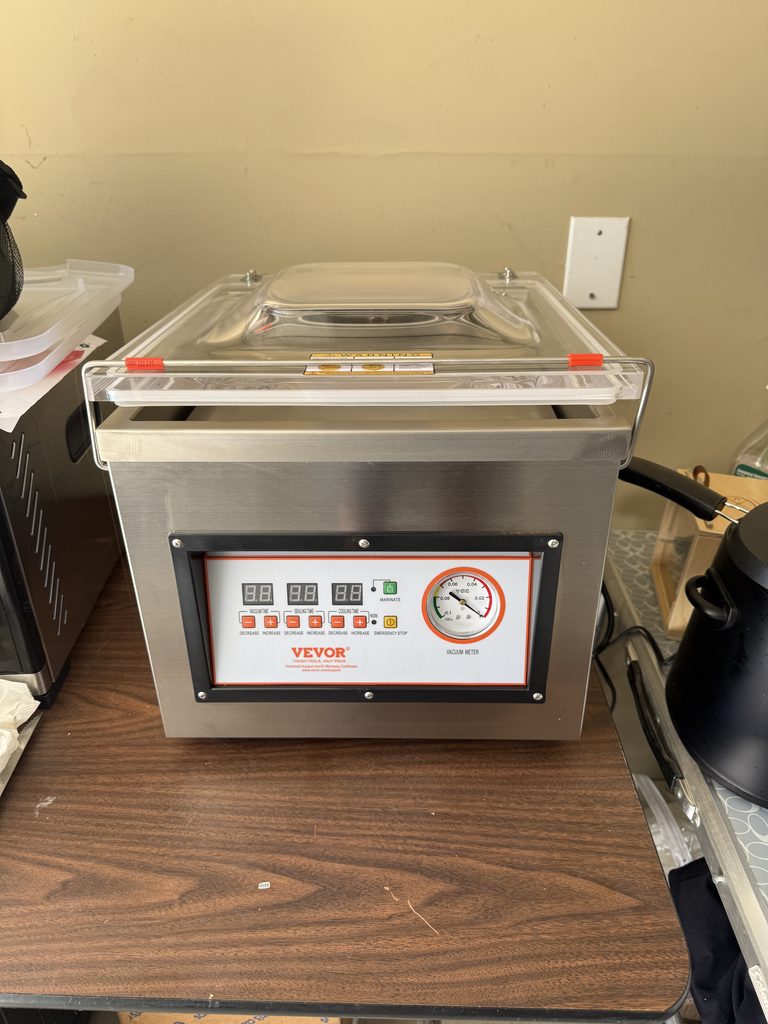
It was much easier. That’s one batch, though. I’ll keep an eye on how the chamber-sealed cheese holds up and update this after the Christmas smoke.
Troubleshooting: Over-Smoked Cheese and a Flaming Pellet Tube
Can cheese be over-smoked? Yes. Too much smoke or too much time can leave the cheese harsh and bitter. Heat creates a different problem: without ice — or with the black smoker sitting in direct sunlight — the cheese can soften, sweat oil, and take on smoke differently than intended. Control both the smoke and the temperature. Full story: Can You Over-Smoke Cheese?
Pellet tube won’t stop flaming. A new or unfamiliar tube can be harder to keep at a smolder. If it catches flame after you’ve moved it to the smoker, a short spray of water is usually enough to knock it back down without killing the smoke entirely. Full story: How to Stop a Pellet Tube From Flaming
The Christmas Smoke
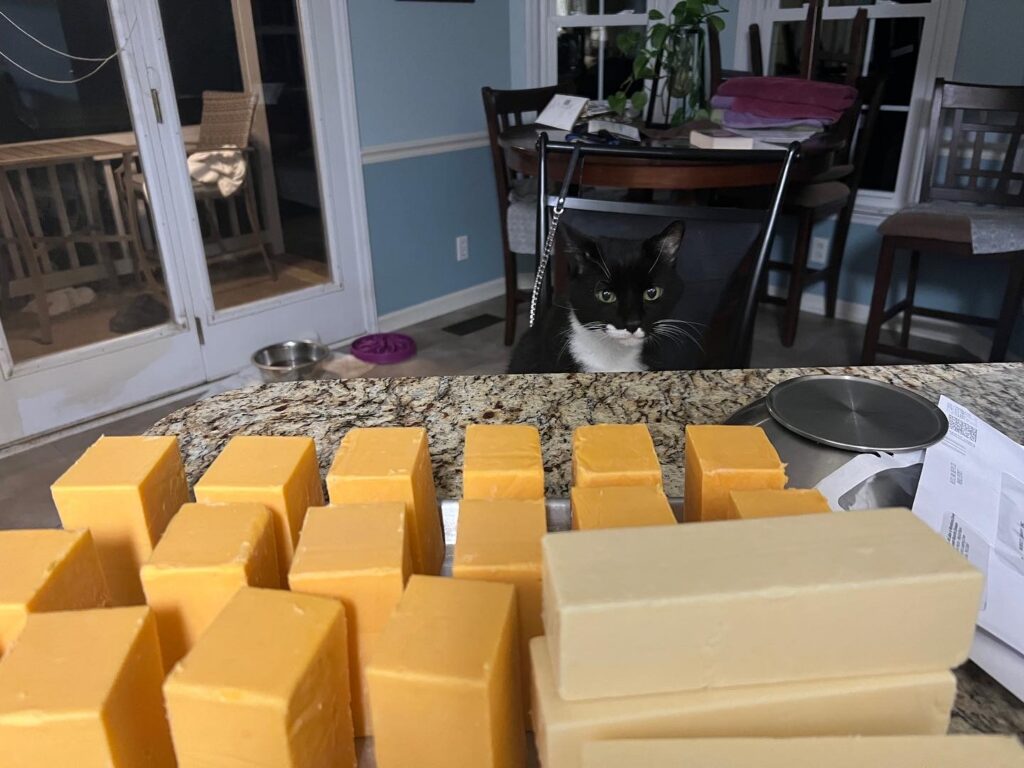
What started as a small hobby has become a ten-year Christmas tradition. Last year I smoked three batches — 36 sticks each, 108 sticks total — and mailed the finished cheese across the country to family and friends. The smoked cheese goes out with batches of smoked almonds and cashews, turning the annual smoke into a full Christmas package rather than just a stick of cheese in the mail. At this point, people expect it. It’s less a side project than an annual commitment.
What to Do With Smoked Cheese
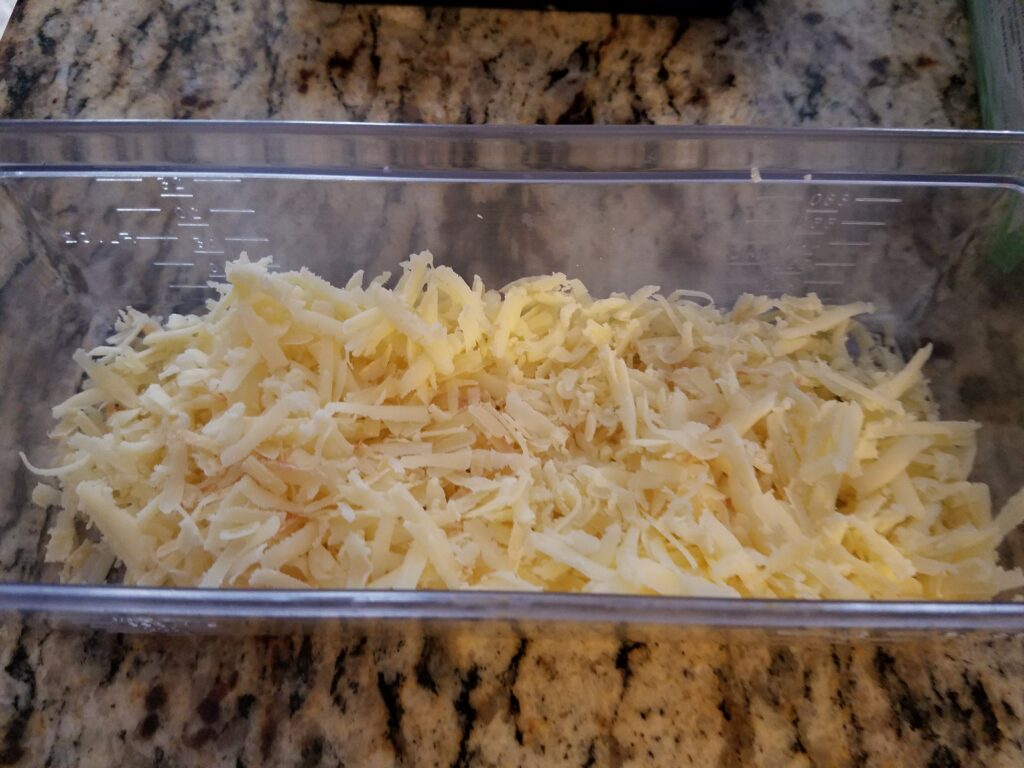
- Straight — sliced and eaten on its own, no preparation needed
- Crackers — the simplest way to serve it to guests
- Eggs — folded into scrambled eggs or an omelet
- Mac and cheese — melts in well for a smoky twist on the classic
- Hash brown casserole — works the same way, adding smoke to a breakfast staple
FAQ
How long does cold-smoked cheese need to rest before eating? At least 3 weeks, sealed and refrigerated. Some batches benefit from closer to 4.
How long does it keep? In my experience, properly vacuum-sealed and continuously refrigerated cheese has kept for up to a full year.
Does wood type matter much? Wood choice matters, although time, smoke density, and resting affect the finished flavor too. I’ve successfully used cherry, oak, and hickory, and lately I’ve been using hickory most often.
Can you fix over-smoked cheese? Not fully. A longer rest helps some, but it’s better to control smoke time going in.
How many sticks can you fit in one smoke? Up to 36 across the top and bottom grates of a 22″ WSM, without rotating, as long as they aren’t touching.