Decided to try to cook burnt ends for the first time. The normal process would be to cook a full brisket and then separate the point and use it for burnt ends. In this situation I used a fresh brisket and cut the point and some of the flat out and smoked it. I determined late in the day, that I should have started earlier. But I decided to improvise and roll the dice.
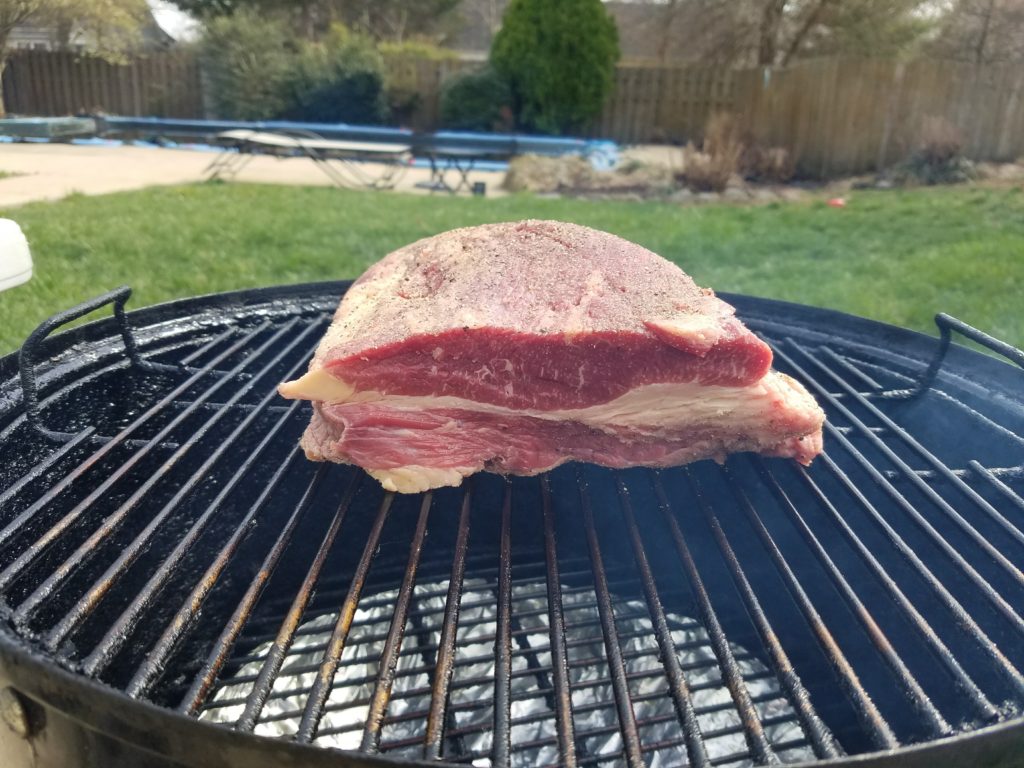
First Attempt
I got a later start than I should have, and realized partway through the day that I’d need more time than I had left. Rather than push everything back, I decided to improvise and roll the dice.
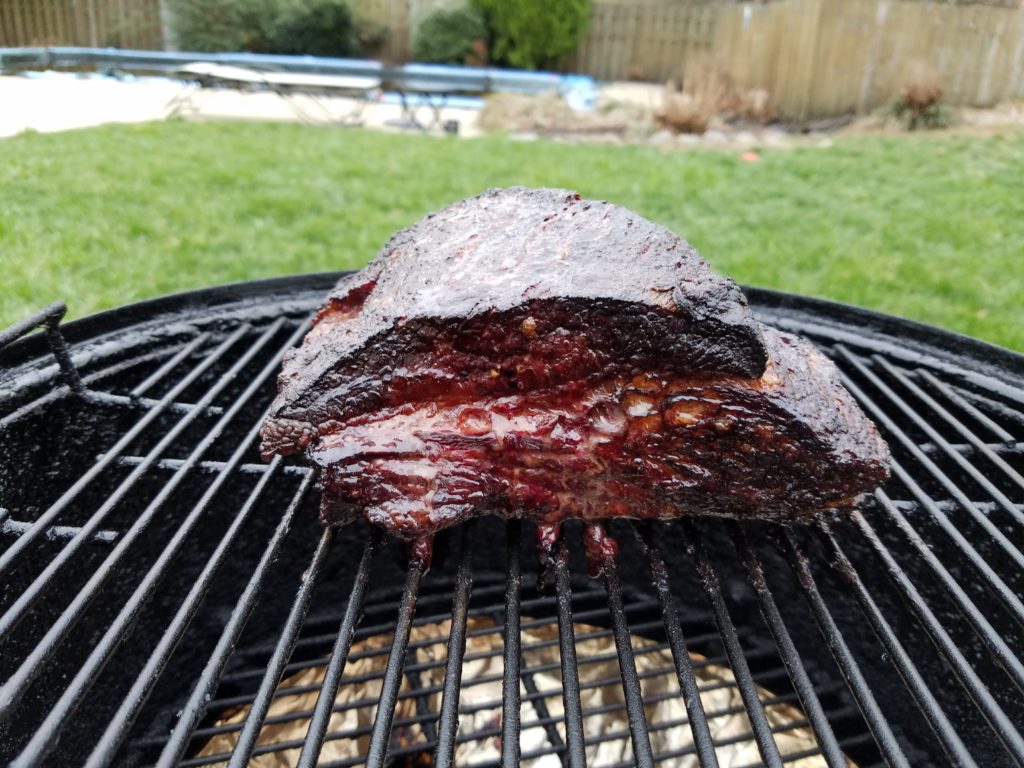
I smoked it for about 6.5 hours — nowhere near long enough to get it properly tender — but with time running short, I pulled it anyway.
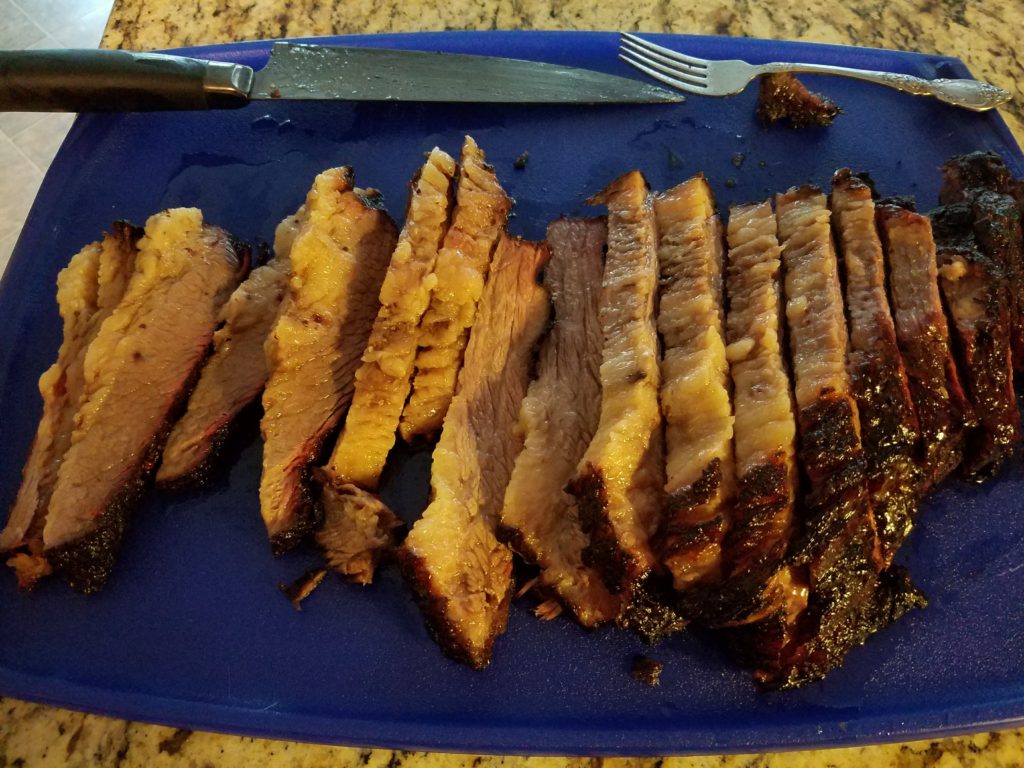
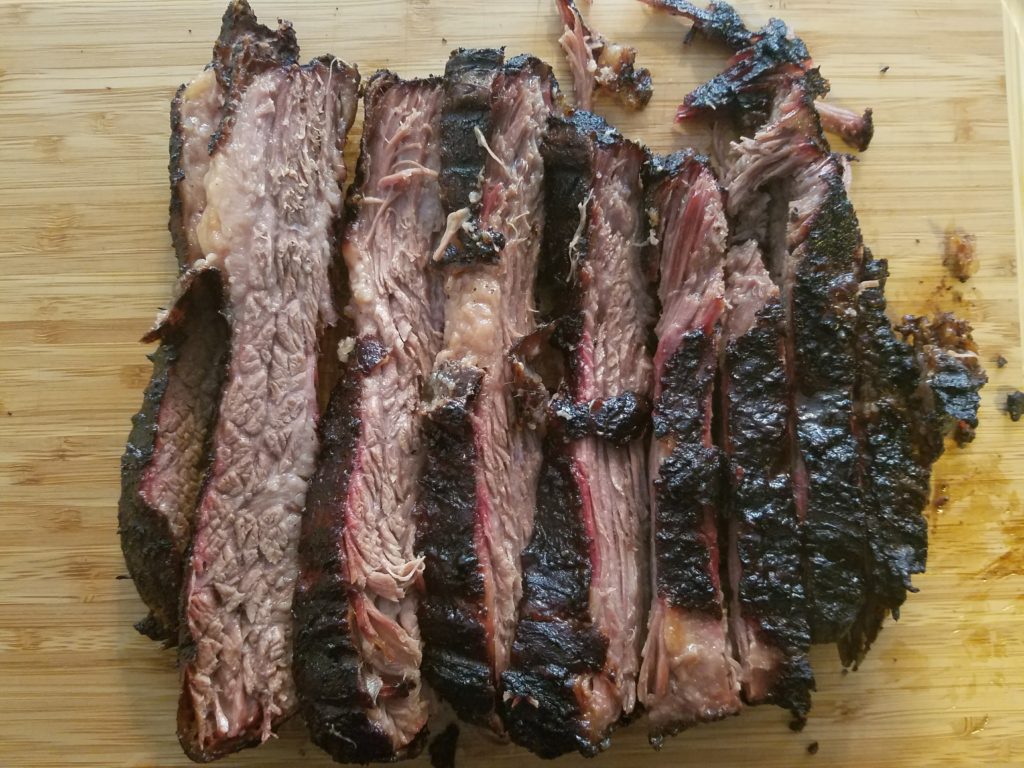
I sliced it thick and cubed it.
I added more seasoning, barbecue sauce, and apple cider vinegar, then returned the cubes to the smoker for another 90 minutes with more hickory wood.
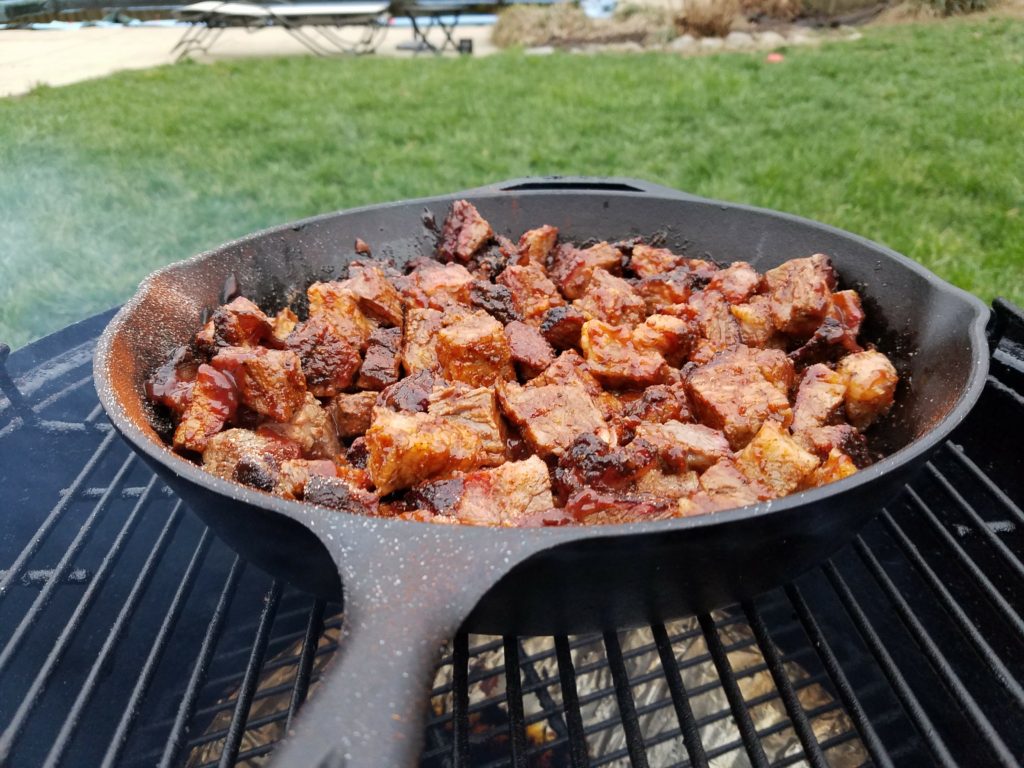
Here’s how they came out.
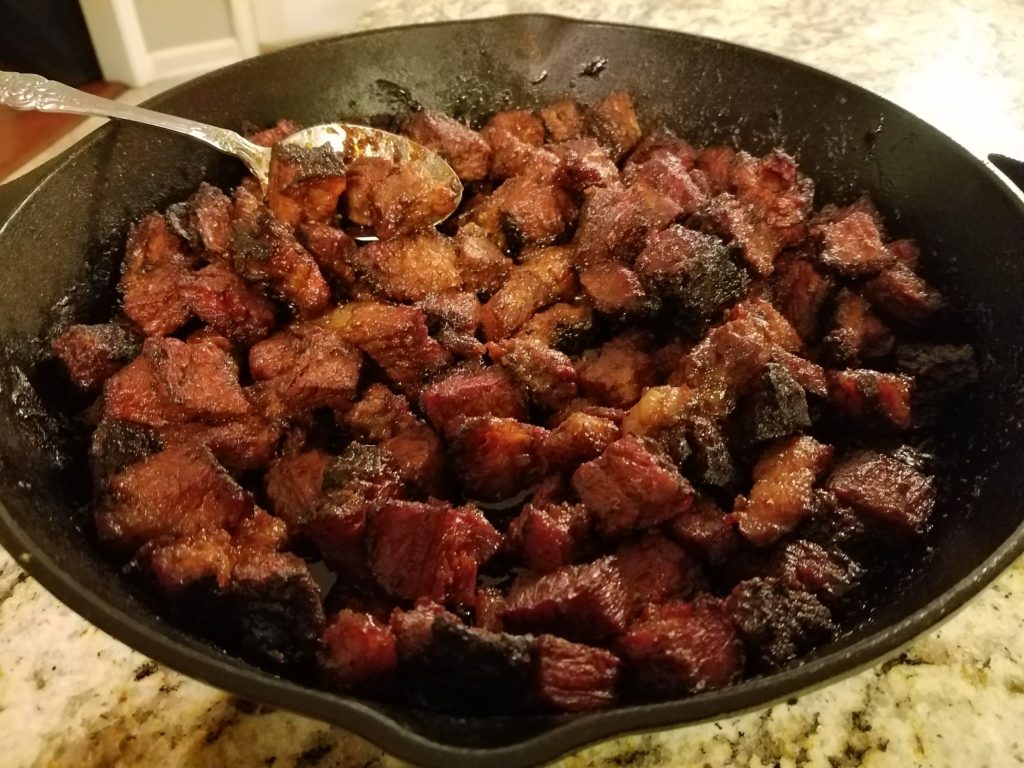
It had great flavor, but it wasn’t tender enough for my liking — because it never actually reached the right internal temperature before I pulled it. I ended up finishing the leftovers covered in the oven for another 1.5 hours just to get them to a place I was happy with. Lesson learned: cook it to proper temp before you finish it, not just until you run out of daylight.
Second Attempt — What I Changed
One week later, I went back with the same product — another packer from GFS, 11 pounds — and applied what I’d learned. Two things changed: I started much earlier, and I ran hotter.
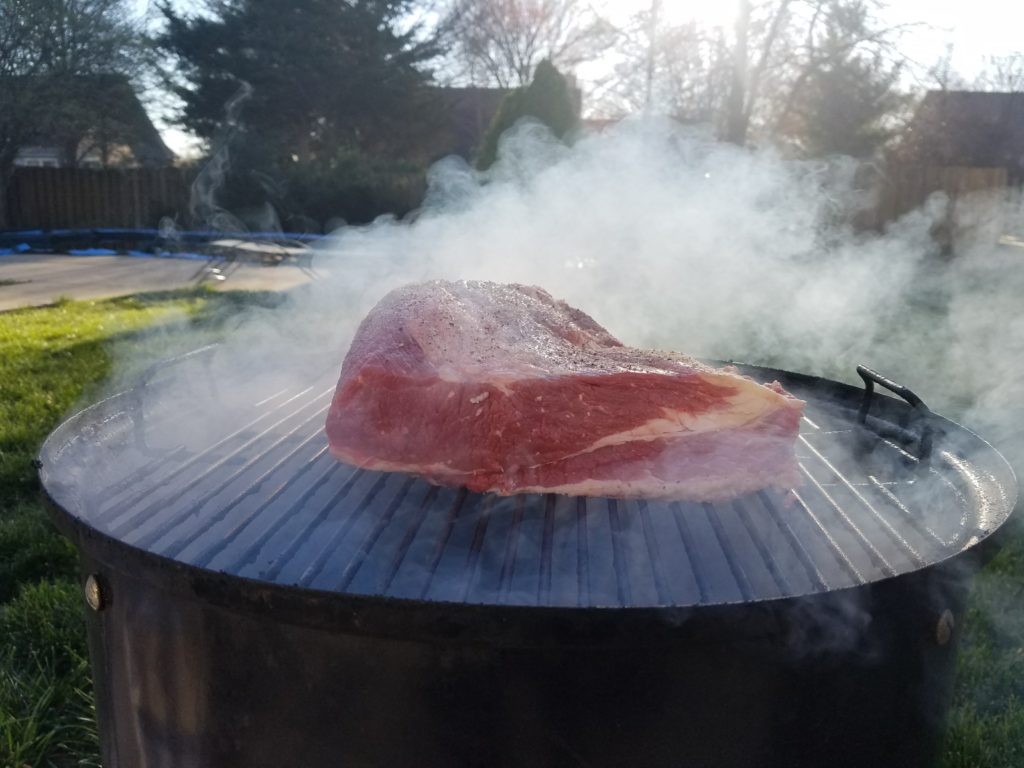
I put the brisket on at 8:00 AM this time, targeting 275-300°F instead of my usual low-and-slow range. At that speed, I didn’t need the 14-16 hours a full low-and-slow cook to 200-205°F would take. I used hickory for the smoke wood.
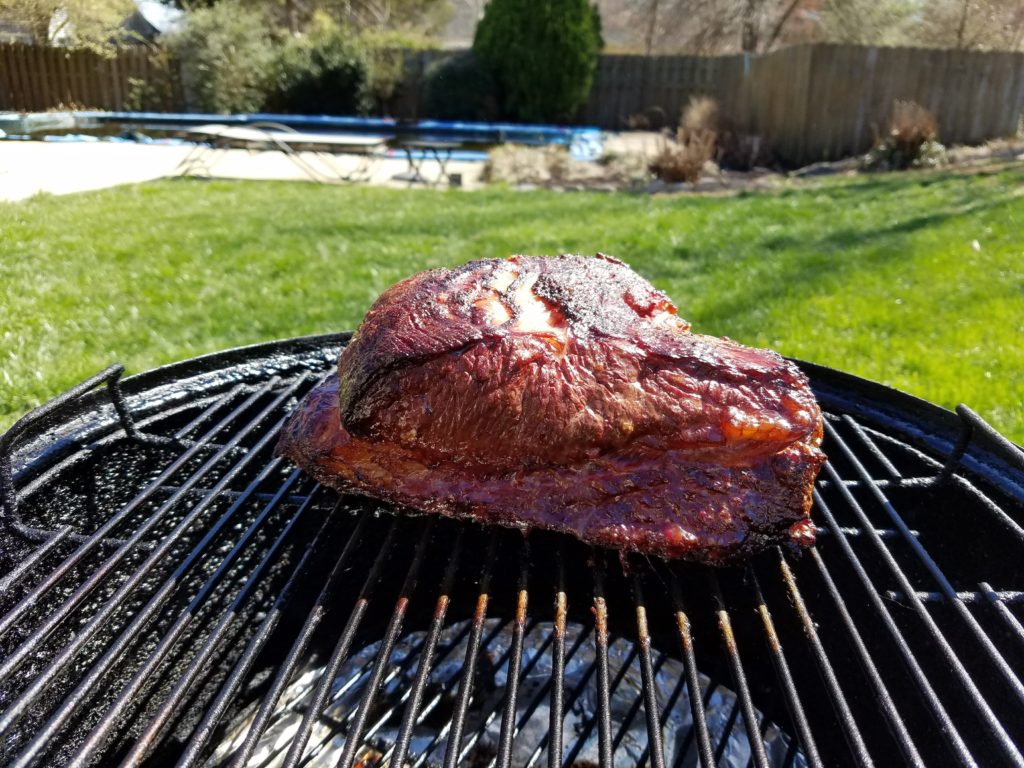
By the 7-hour mark, it was looking good. I pulled it, separated the point from the flat along the fat seam, and returned both sections to the smoker until they hit 200°F internal.
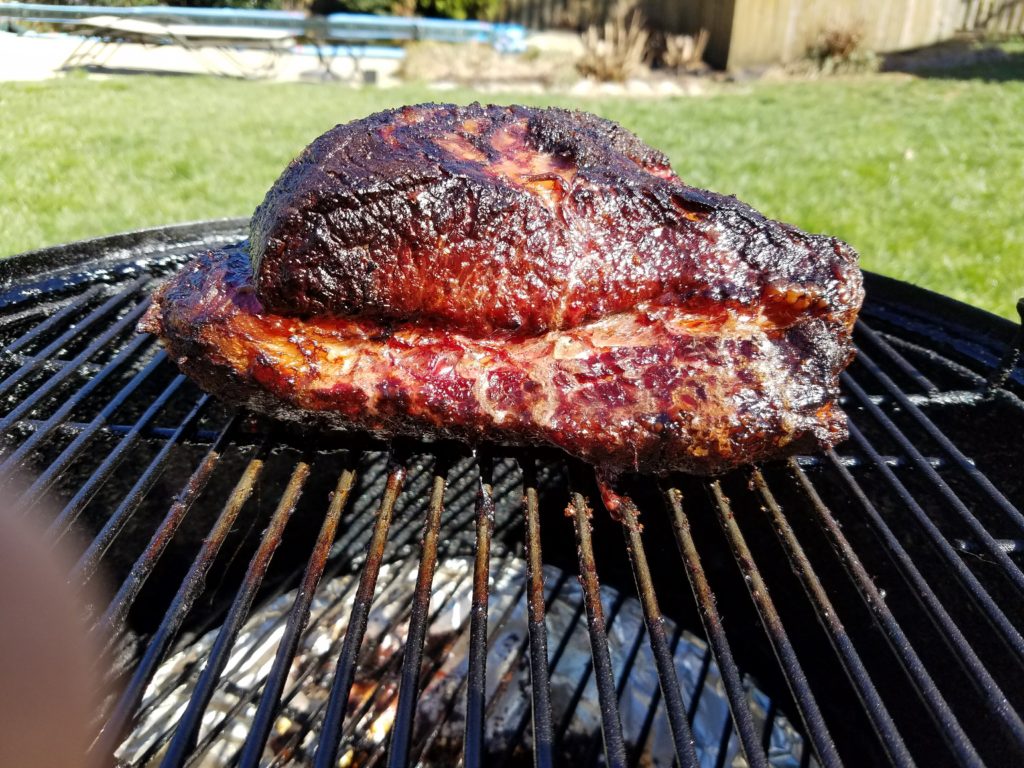
Once they hit temp, I sliced and cubed both sections, then added more seasoning, barbecue sauce, and apple cider vinegar — same finishing move as the first attempt, but this time starting from meat that had actually reached the right temperature.
Back on the smoker with more wood for another 90 minutes, stirring roughly every 30 minutes.
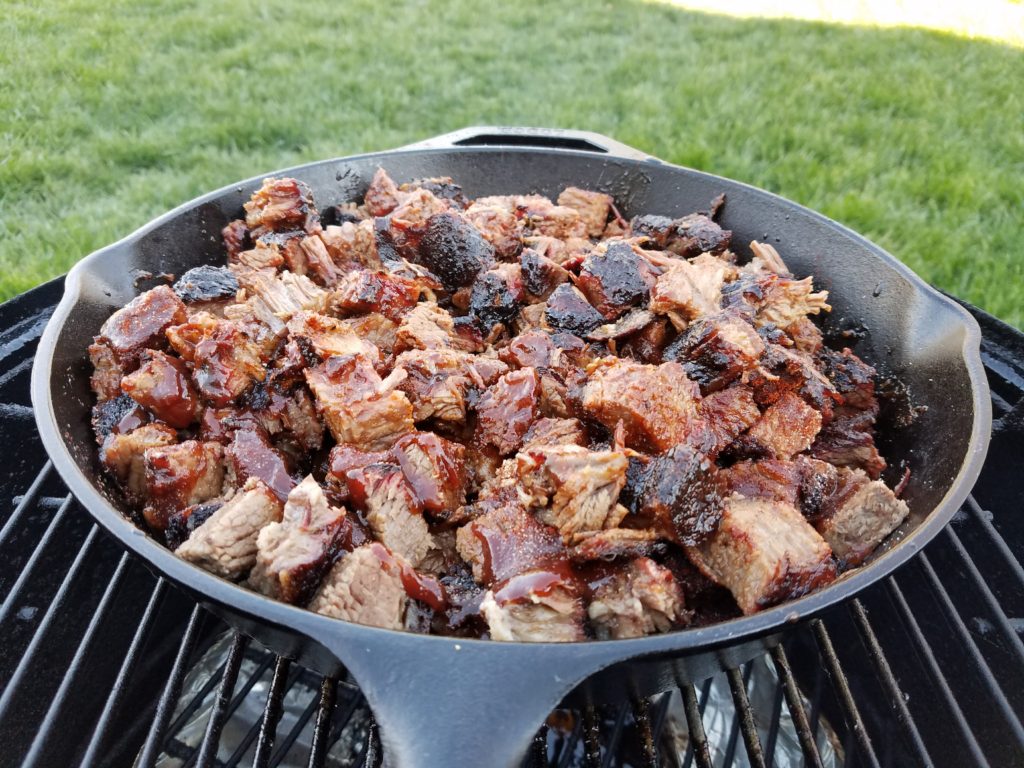
Result
This time, it was spot on. Nailed it — tender, with a great mix of bark and interior texture, and the extra time I’d put in up front made all the difference.
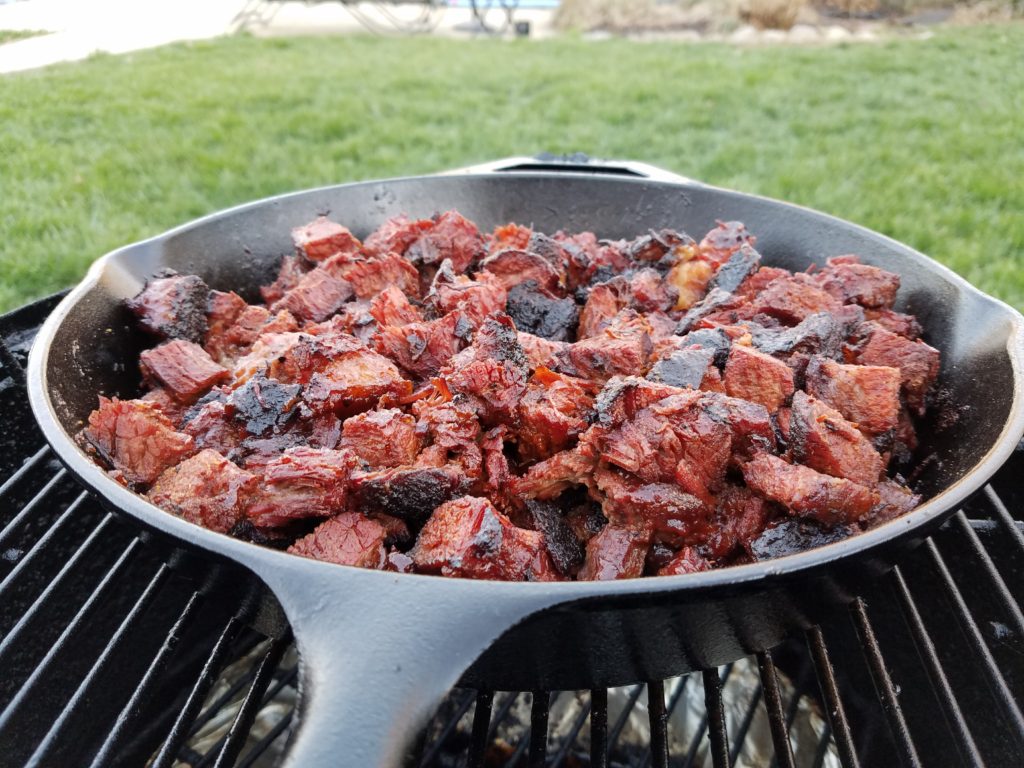
The whole lesson from these two cooks: burnt ends need to actually hit temperature before you start the finishing step. Running hot (275-300°F) is a legitimate way to get there faster if you don’t have a full low-and-slow day to spare — just don’t cut the process short to make a deadline.
Want to see a different take on burnt ends, done later from a raw packer split point-and-flat? Check out my Burnt Ends Project post.
For the full brisket picture — standard method, hot and fast, sous vide, and both burnt ends approaches — see the Complete Brisket Guide.