As a fan of trying every cooking method I can, I decided to sous vide a brisket before finishing it on the smoker. I’d seen plenty of people online talk about how great this turns out. This flat came from the same 12.5 lb full packer as my Burnt Ends Project post — the point went toward burnt ends, and the flat became this experiment.
I seasoned the flat with salt, pepper, and garlic, then sealed it in my FoodSaver with a bit of liquid smoke added for flavor.
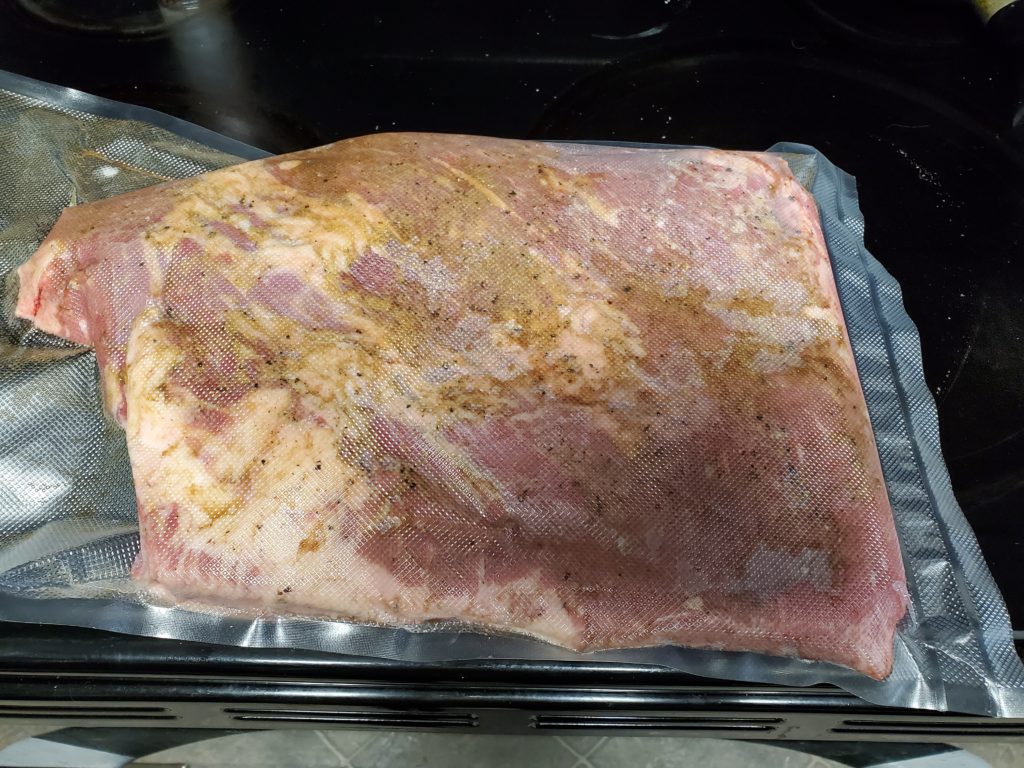
The Sous Vide Stage
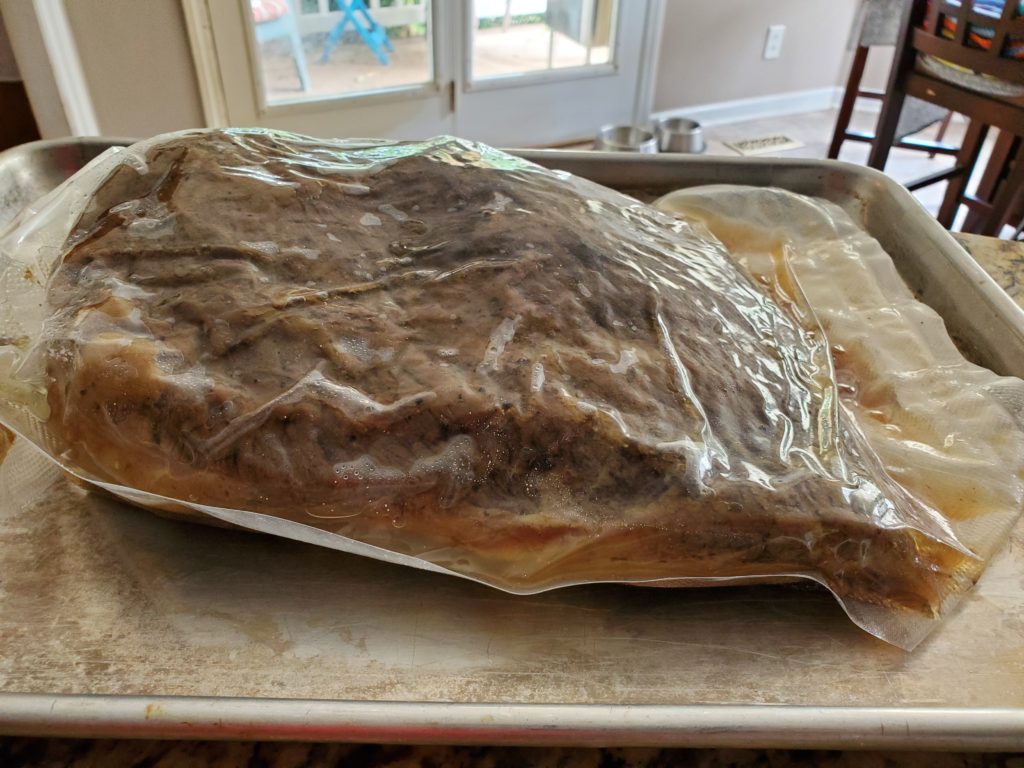
Since I planned to smoke it afterward, I went with the recommended 155°F for 24 hours. As with most long sous vide cooks, there’s shrinkage and liquid released into the bag, and it’s important to keep the product fully submerged for even cooking. I checked on it a few hours in and again at the 8-hour mark, and there was a lot of air and liquid built up in the bag. Concerned about keeping it properly submerged for the full 24 hours, I pulled it, cut the bag open, drained the liquid, and re-bagged it before returning it to the water for the remaining 16 hours.
Once done, the process calls for rapid cooling followed by refrigeration to bring the temperature down as low as possible before smoking.
Prepping for the Smoker
The brisket stayed in the fridge for about 3 hours. The process calls for applying a rub before smoking, but when I pulled it from the bag, I realized I should have removed it from the bag immediately after refrigeration — the fat had rendered during the cook, and after chilling, it had caked all over the brisket. I did my best to remove it, patted the brisket dry, and rubbed it with Jack Daniels Beef Rub.
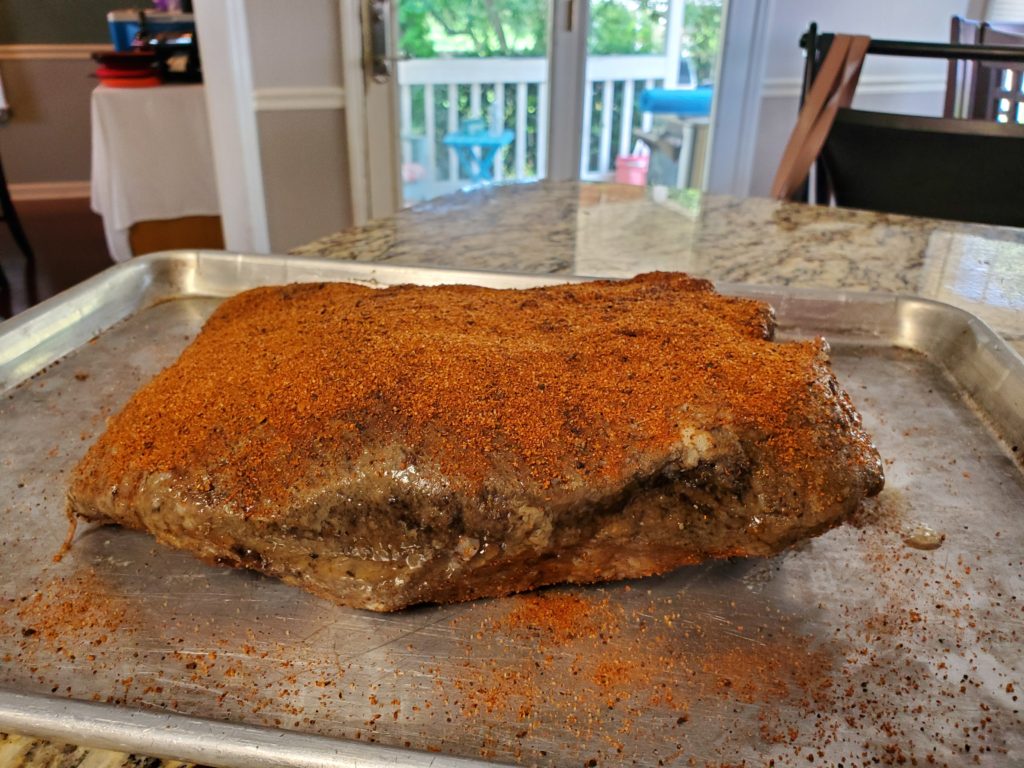
I already had my Weber Smokey Mountain running with the point section from the same brisket cooking (see Burnt Ends Project), so I added the flat to the bottom grate at 225°F, using post oak for flavor. The goal was to bring the now-cold brisket back up to the same 155°F internal temp it had reached in the sous vide bath. That took about 3 hours. I removed it, covered it, and let it rest 30 minutes before slicing.
Why People Turn to Sous Vide for Brisket
A lot of people who reach for sous vide on a brisket do it because smoking one has a reputation: it’s hard, it takes forever, and you have to babysit the smoker the whole time. I understand where that comes from, but it hasn’t been my experience. I smoke briskets overnight regularly — I get it on the smoker, check the vents a few times before bed, and go to sleep. I’ve walked the dogs and played 9 holes of golf while a brisket finished on its own. It’s a long cook, no question, but “long” and “hands-on” aren’t the same thing. Once the smoker’s dialed in, it holds temp on its own for hours at a stretch. And the smoked brisket results speak for themselves.
So for me, sous vide didn’t solve a problem I actually had. The appeal of “set it and forget it, no babysitting” is real for some people, but a properly set up overnight smoke already offers that. What sous vide changes isn’t the effort — it’s the ceiling. And as this cook showed, that ceiling is lower than a real smoke, not higher.
Result
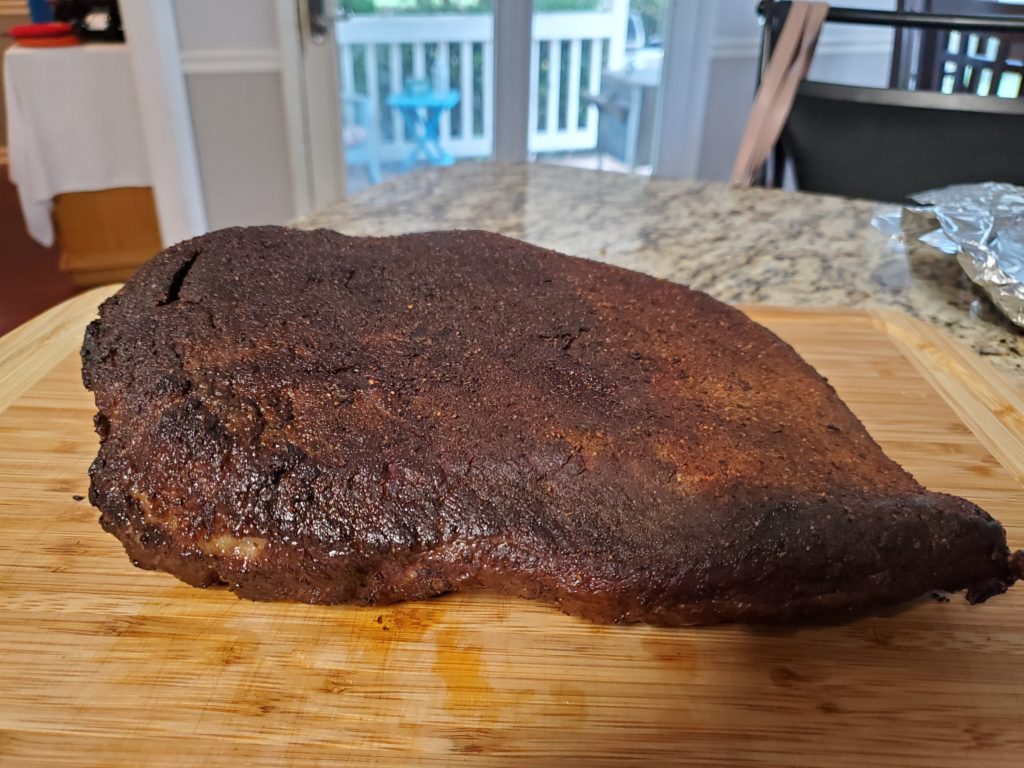
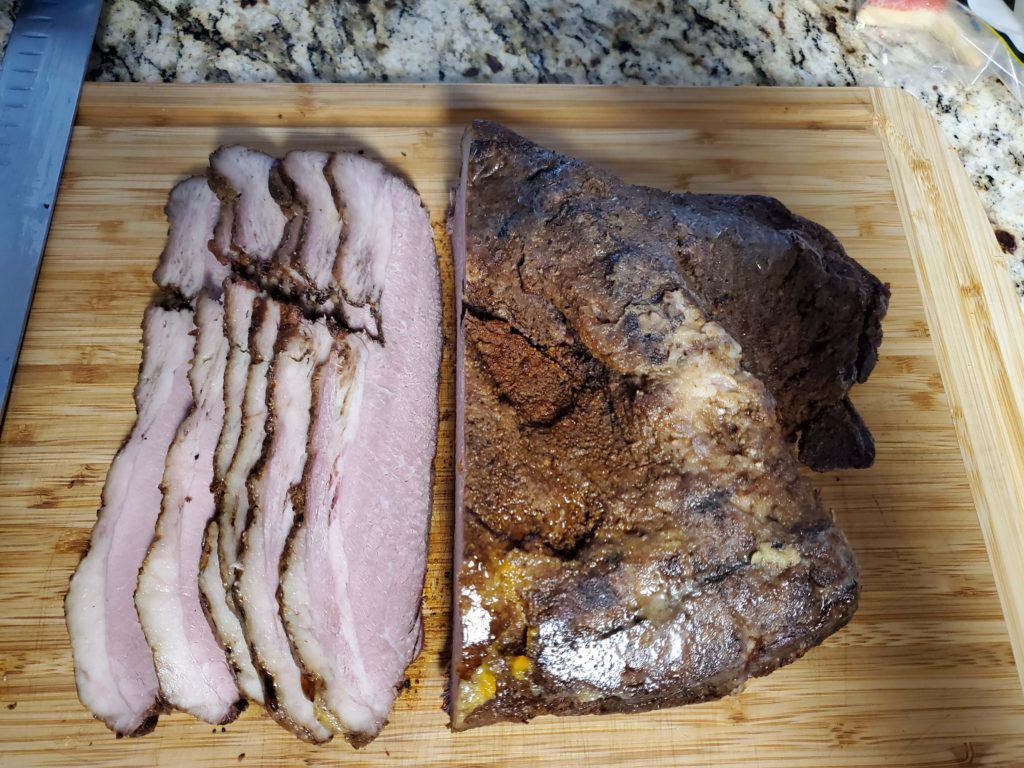
The presentation and aroma were good, but with only 3 hours of actual smoke time, the bark never developed the way it would on a fully smoked brisket — that was about as good as it was going to get given the timeline.
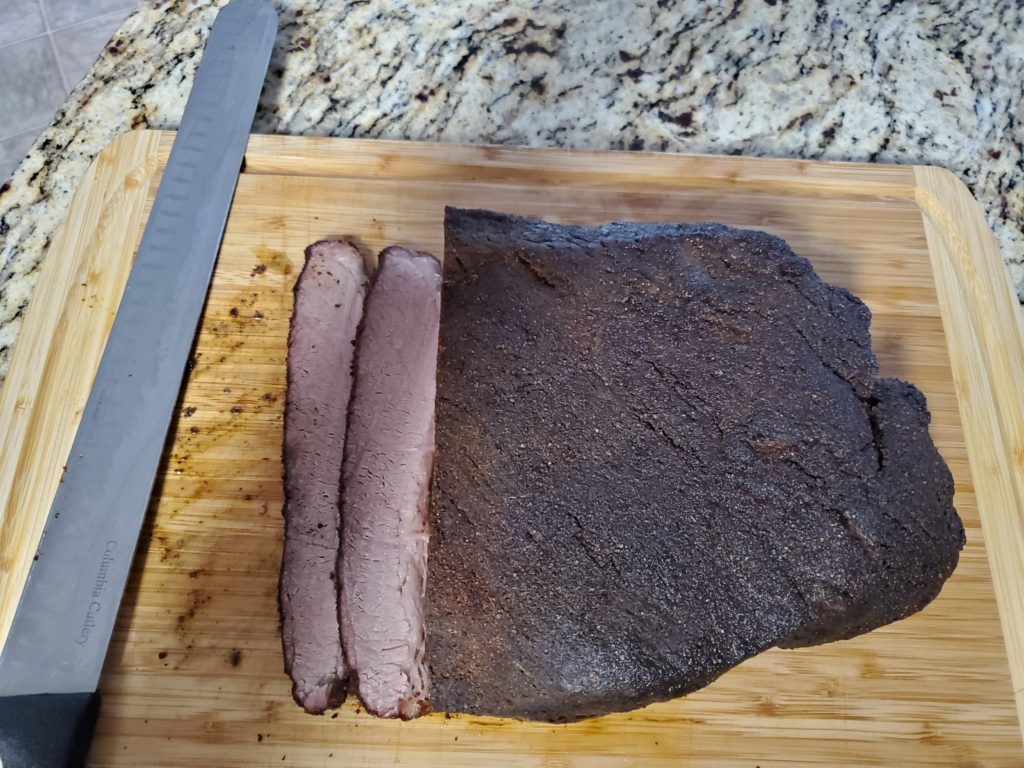
The flavor was decent and it sliced well, but I could clearly tell the difference compared to a standard smoked brisket taken all the way to 203°F. It was edible, but it lacked the flavor and consistency of a proper smoke. I’m not sure if pulling the original liquid out of the bag partway through had any effect on the result — I’ll never really know. Either way, I wouldn’t repeat this method. I’d already mastered a standard smoked brisket, and it’s hands down better than this. Worth trying once, but they can’t all be winners.
Want to see what the point section from this same brisket became? Check out my Burnt Ends Project post. Beef Burnt Ends
For my full take on every brisket method I’ve tried, including why this one didn’t stick, check out the Complete Brisket Guide.