Brisket used to scare me. The cost of the product and the time commitment felt like a real risk/reward proposition, and it took a while — and a genuinely rough first overnight attempt, complete with a 2:25am page for a network issue mid-cook — to actually get comfortable with it. That first overnight brisket is also where the site’s whole “midnight smoker” theme started.
Read how the Midnight Smoker started I’m a Joker, I’m a Midnight Smoker
Since then, I’ve settled into a method I trust, tried a couple of real departures from it, and picked up a few hard lessons along the way. This is where I’ve pulled all of that together.
The Method I Actually Use
If someone asks me how I cook brisket, this is the answer: overnight, low and slow, minion method, no babysitting required. I get the smoker settled in before bed, let it run through the night, and give myself plenty of time for the hold afterward — I’ve held a finished brisket in a cooler for up to 6 hours without issue.
A lot of people avoid smoking brisket because they assume it means staying up all night checking on it. In my experience, that’s just not true. I check the smoker a handful of times before bed, make sure the temp’s holding, and trust it to do its job. I don’t use continuous probes or electronic monitors for this — I just don’t need to.
One lesson that cost me a rough start on an otherwise standard cook: fill your water pan with hot water before an overnight smoke, not cold straight from the tap. I skipped that step once and spent the first few hours fighting to get the temp up.
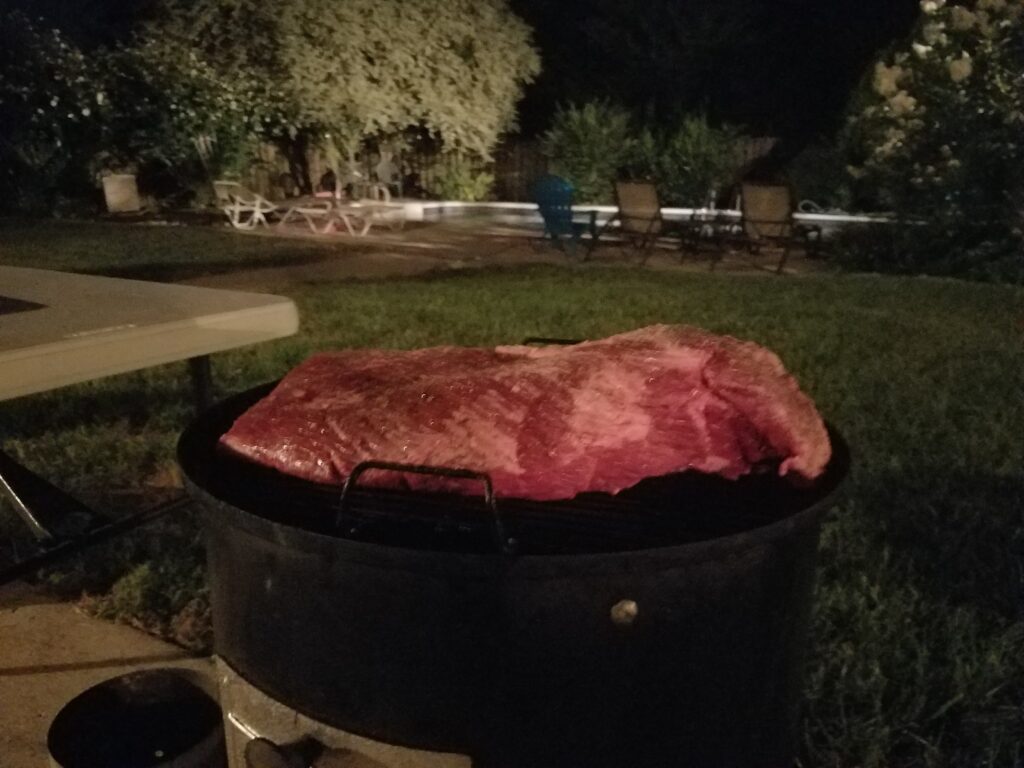
Full writeup on the standard method Overnight Brisket
When I Change Things Up
The overnight method is my default, but over the years I’ve changed both the equipment and the cooking approach for different reasons.
The equipment change was purely about size. My 18″ WSM is the smoker I reach for most often — efficient, and plenty big for most cooks — but a large packer can extend beyond the protection of the water pan on the 18″, leaving the ends more exposed to direct heat. Moving a 13 lb packer to my 22″ gave it considerably more room, with plenty to spare.
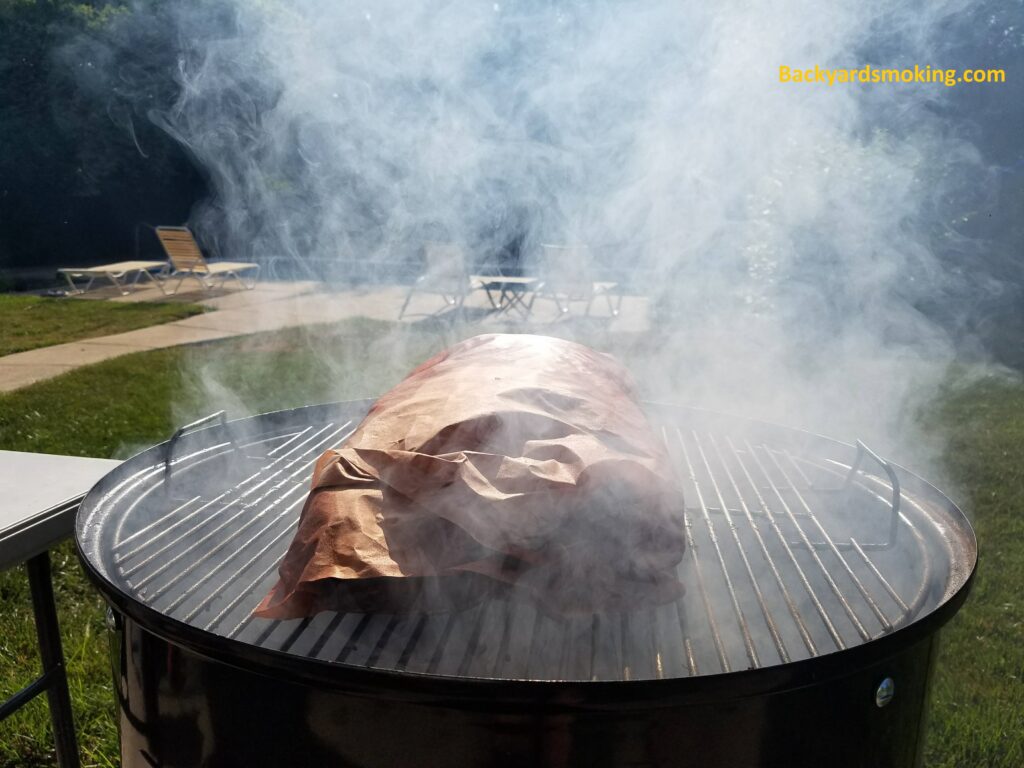
The lesson there wasn’t really about brisket at all — it was learning not to overfill the bigger water pan the same way I would on the smaller smoker.
The method change was hot and fast — something I’ve only run a couple of times against a mostly low-and-slow track record. The most memorable one came right after finishing the rebuild from my garage fire, which made it a genuine two-fold celebration: the smoker back in action, and the house finally repaired. Running around 350°F instead of my usual 225-250°F, wrapped in butcher paper at 170°F internal, that brisket was done — cook and rest included — in about 6 hours, versus the 12-13+ hours the standard method takes. The tradeoff was a lighter smoke ring, but it was still moist and tender.
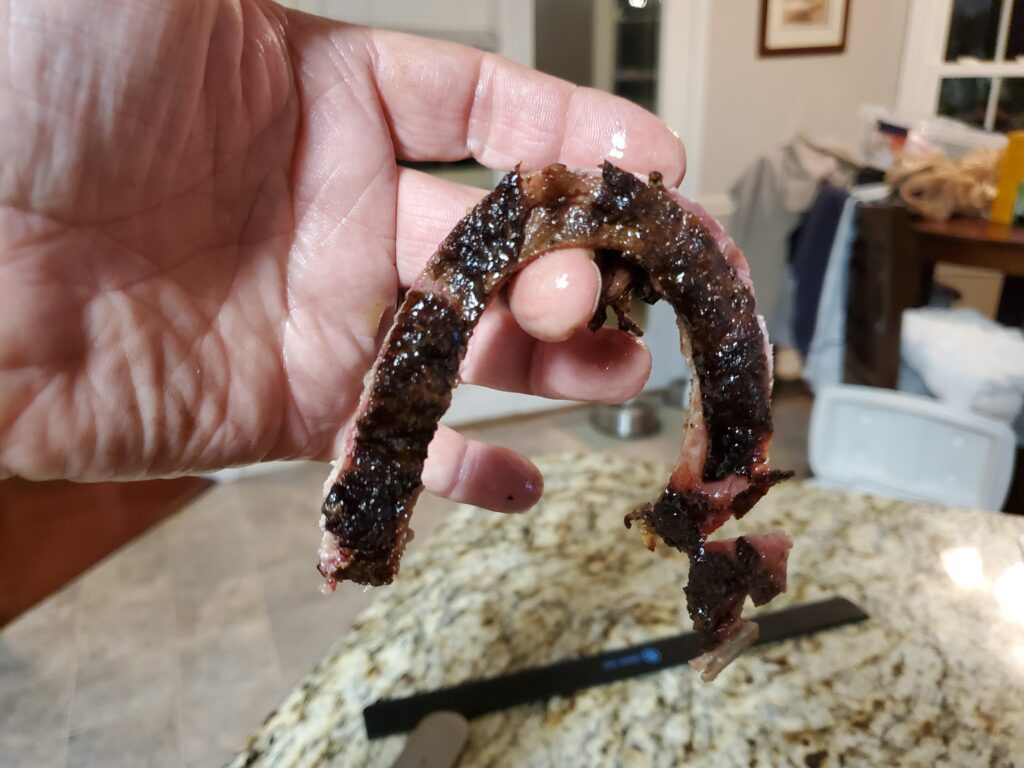
I picked up two more briskets at the same price around the same time, to smoke again down the road.
Read the smoker-size comparison WSM 18″ versus 22″
Read the hot-and-fast story Hot and Fast Brisket
Sous Vide Brisket: My Honest Verdict
I’ve had good results running sous vide on plenty of cuts, but brisket wasn’t one of them.
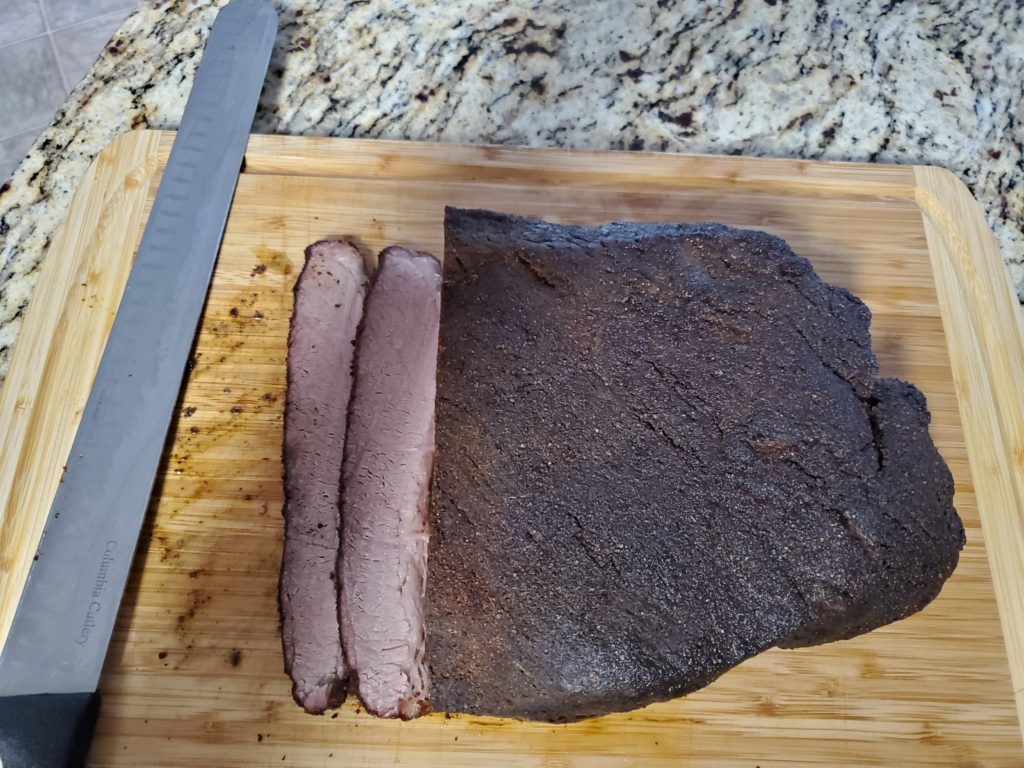
A lot of people turn to sous vide specifically because they think smoking a brisket means babysitting the smoker for 13+ hours straight — and as I mentioned above, that assumption just isn’t true in my experience. The sous vide version also never developed the bark or depth of flavor a real smoke gives you, even after finishing it on the smoker afterward. I wouldn’t repeat it. If you’re looking for a shortcut around the “long cook” problem, hot and fast solves that better than sous vide ever did for me.
Read the full experiment Sous Vide versus Smoked
Quick Reference
| Method | Time | My Result |
|---|---|---|
| Overnight, Low and Slow | 12-13+ hrs | Best bark/smoke ring; my default |
| Hot and Fast | ~6 hrs | Lighter smoke ring; still moist and tender |
| Sous Vide, then Smoked | ~27 hrs | Weakest bark; wouldn’t repeat |
Burnt Ends: A Different Branch of the Brisket Tree
Burnt ends aren’t really a fourth whole-brisket method alongside the three above — they’re their own project, usually made from the point section rather than the whole packer.
My first attempt taught me a lesson the hard way: I ran out of daylight and pulled the meat before it actually reached temperature, then had to finish it in the oven just to save the cook. One week later, with an earlier start and a hotter smoker, I nailed it.
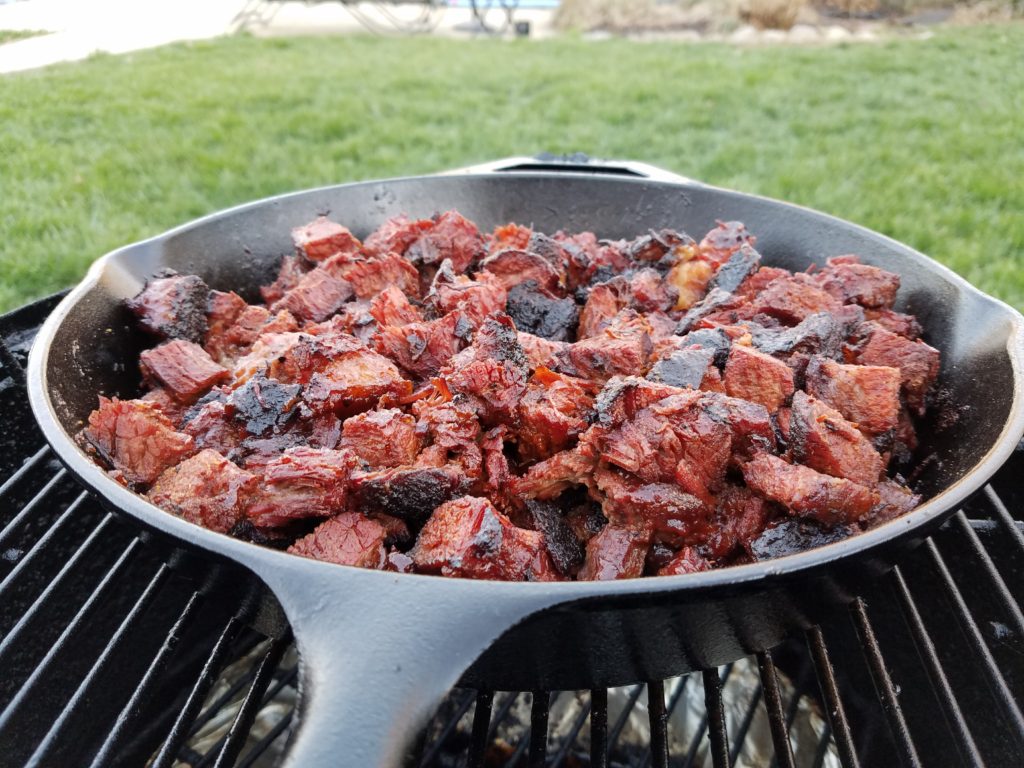
The core takeaway holds regardless of method — burnt ends need to actually hit temp before the finishing step; running hot is a legitimate way to get there faster if you’re short on time, but you can’t shortcut the process just because you’re running out of daylight.
Years later, I tried a different approach entirely: separating the point from a raw packer before it ever hit the smoker, rather than cooking the whole brisket first and separating after. Both methods work; it mostly comes down to whether you’re planning the split from the start.
Read the fail-and-fix story Burnt Ends
Read the raw-separation approach Burnt Ends Project
Best Brisket I’ve Had That Wasn’t Mine
Smoking your own is one thing — tasting what the best in the business can do is another. On a work trip to Austin, I made a point of hitting a few of the city’s most famous barbecue joints between training sessions. The brisket at Blacks Barbecue set a bar I still think about — no sauce required. The beef rib on that same tray was a different kind of great — more like brisket on a stick than a traditional rib, a real novelty, but delicious. If you want to see what a home-smoked bone-in beef rib looks like on my own smoker, check out Smoking American Wagyu Beef Ribs. Read the full Austin trip: Trip to Austin — Beef Barbecue Holy Land.
Frequently Asked Questions
Do you really not babysit an overnight brisket? Correct. I check it a handful of times before bed and trust the smoker to hold temp on its own overnight.
Fat up or fat down? I’ve done both over the years, without a strong conclusion either way.
What temperature do you pull brisket at? I go by feel and probe tenderness, generally in the 203-205°F range on the standard method; the hot-and-fast cook came off a bit earlier, closer to 195°F.
Does smoker size actually matter for brisket? Mainly at the larger end — a big packer that extends past the water pan on a smaller smoker gets more direct heat on the ends. That’s one reason I liked having the extra room when I moved a large packer to the 22″ WSM.