Yes, a smoker can absolutely run unattended overnight — I gave up babysitting mine a long time ago, and it’s held up through brisket cooks, pork butt cooks, and even genuinely cold weather. This particular smoke was a fairly typical overnight run, except for one thing: it was 19°F outside, cold even for Middle Tennessee, which made it a real test of whether the smoker could hold its own overnight without constant attention.
I’d picked up six pork butts on sale at my local Kroger for $1.29/lb that week. I trimmed off the excess hard fat and did my usual seasoning — I rarely use a pre-made rub, and even when I mix my own, I don’t measure and apply evenly; it’s more of a sprinkle-and-splatter method. Heavy on garlic and paprika, light on salt and pepper, then raw sugar on all sides before it goes on the smoker.
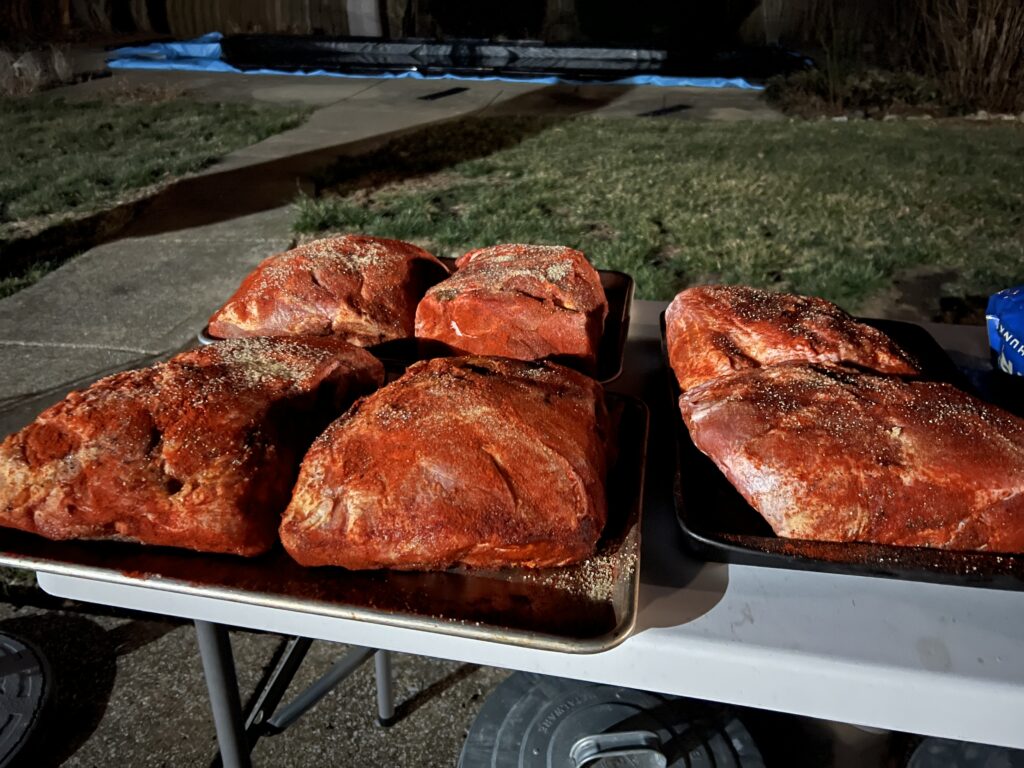
This is a process that I have completed on many occasions, to smoke pork butts low and slow.
I used my 22″ Weber Smokey Mountain, which handles all six butts comfortably, along with a wifi thermometer I’d recently picked up so I could keep an eye on temps from my phone if I wanted to. I started the smoker around 7 p.m., filled it with charcoal, and buried some hickory chunks. I filled the chimney starter, got it roaring hot, dumped it on top of the unlit charcoal, and assembled the smoker. I’ve never bought into the “good smoke, bad smoke” debate about getting the smoker fully up to temp before adding meat — it’s always seemed unnecessary to get the smoker to temp, then throw 50 lbs of cold meat on it and wait for it to climb back up again.
The Weber Smokey Mountain uses a water pan, and I filled it with hot water when assembling — about 3 gallons. There’s plenty of debate about whether to fill the water pan at all, but I’ve always found it works best on long smokes to keep it full. I put three butts on the bottom rack and three on the top, set up the probes, and let it go. My target is around 225°F at the top grate. I monitored from the app until I called it a night around 10 p.m.
I woke up around 6 a.m. and decided to check on the butts.
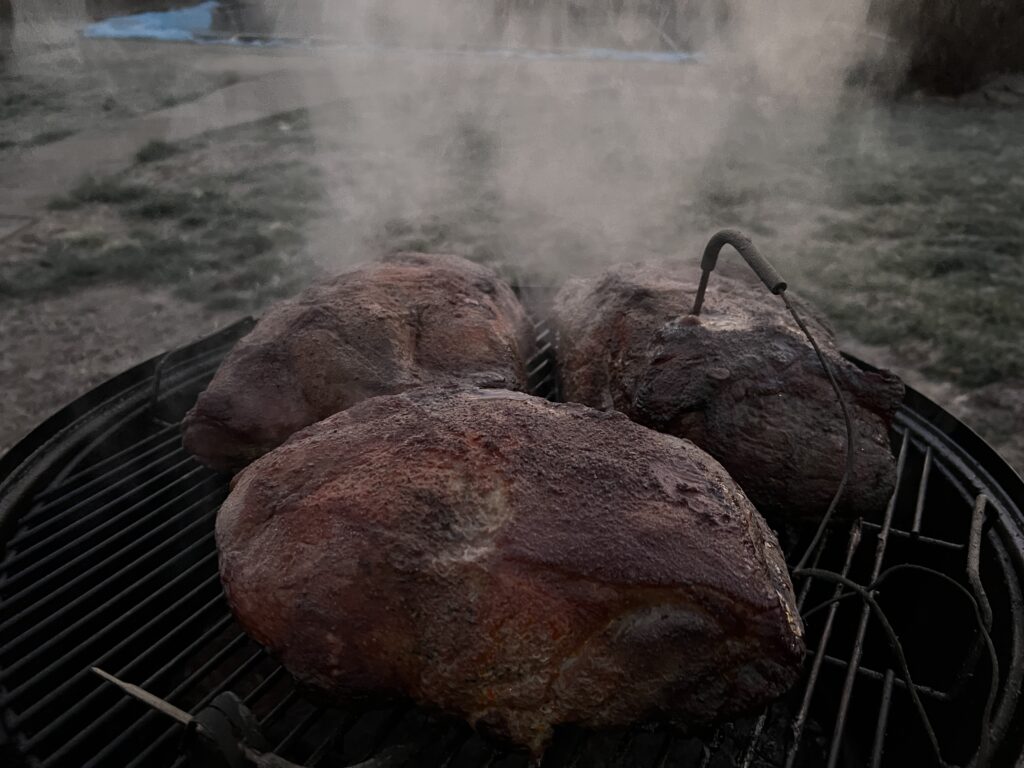
It was a brutally cold 19°F. I checked the charcoal, and even though it was holding steady, I knew it wasn’t going to last through to the end. I removed all six butts, separated the smoker into its top and bottom sections, and added more charcoal. While that heated up, I rotated the butts — moving the top shelf down to the bottom and vice versa — then reassembled the smoker. Once it was back together, I gave everything its first spritz of purple grape juice. I love using grape juice — it helps with color and the high sugar content helps build bark while giving the pork a subtle sweetness.
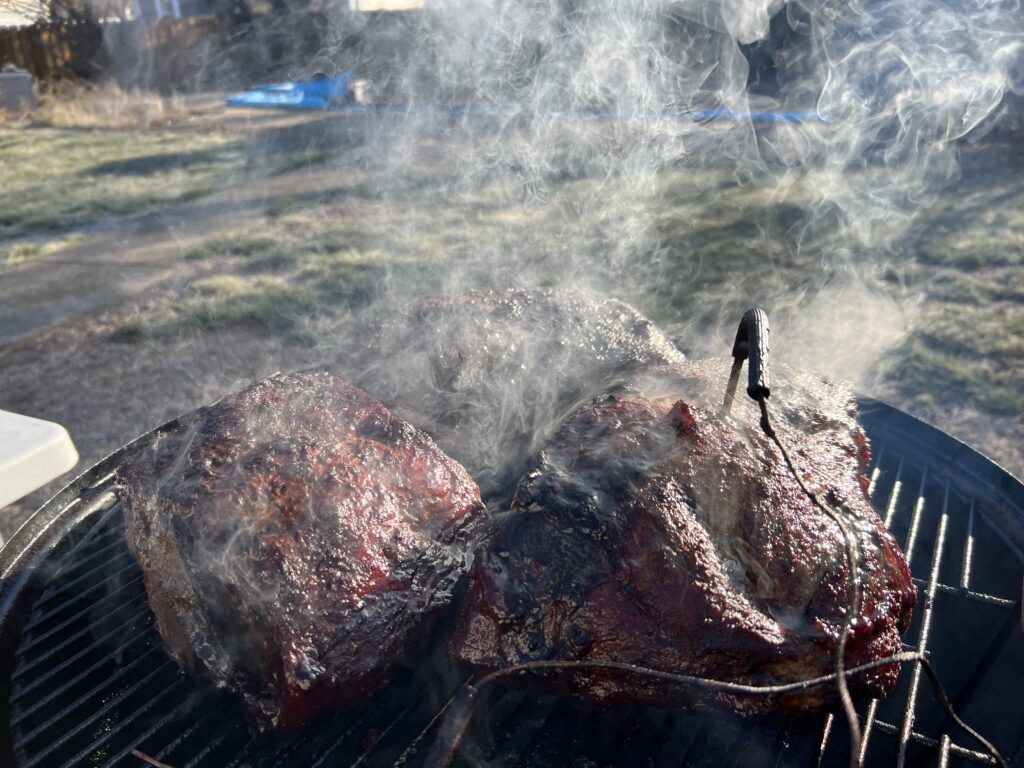
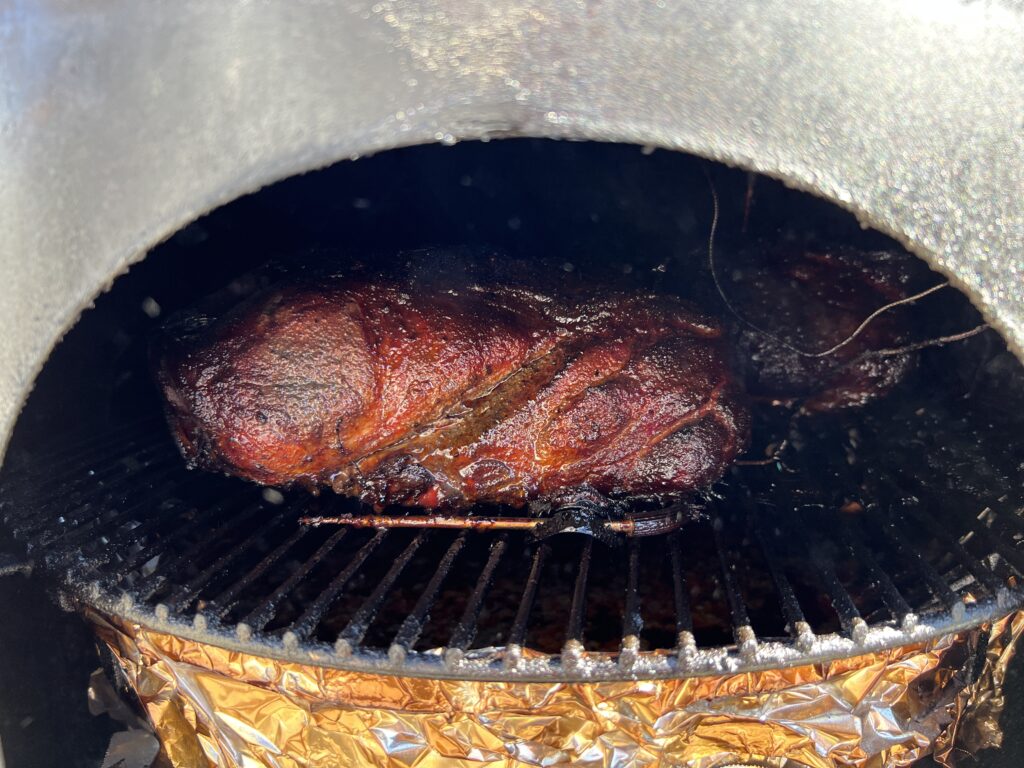
On the Weber, heat is regulated entirely through airflow — one vent on top, which I always leave fully open, and three vents on the bottom. Overnight, I had two of the bottom vents closed and one partially open. As the day went on, I kept tweaking them, gradually opening all three as conditions changed.
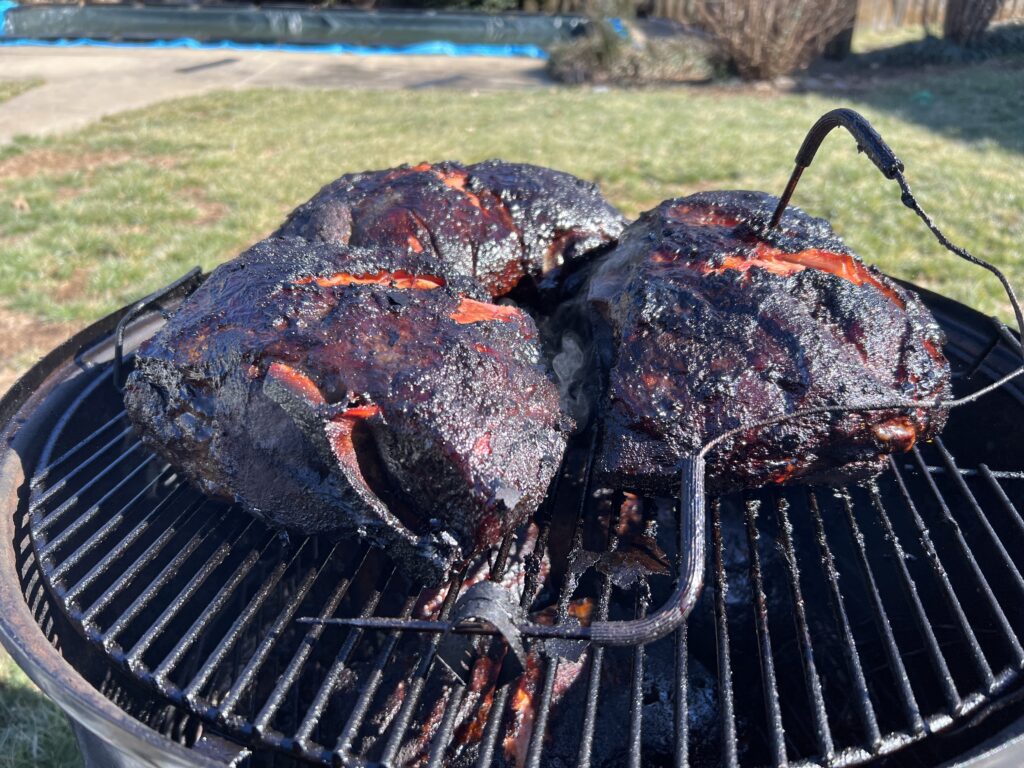
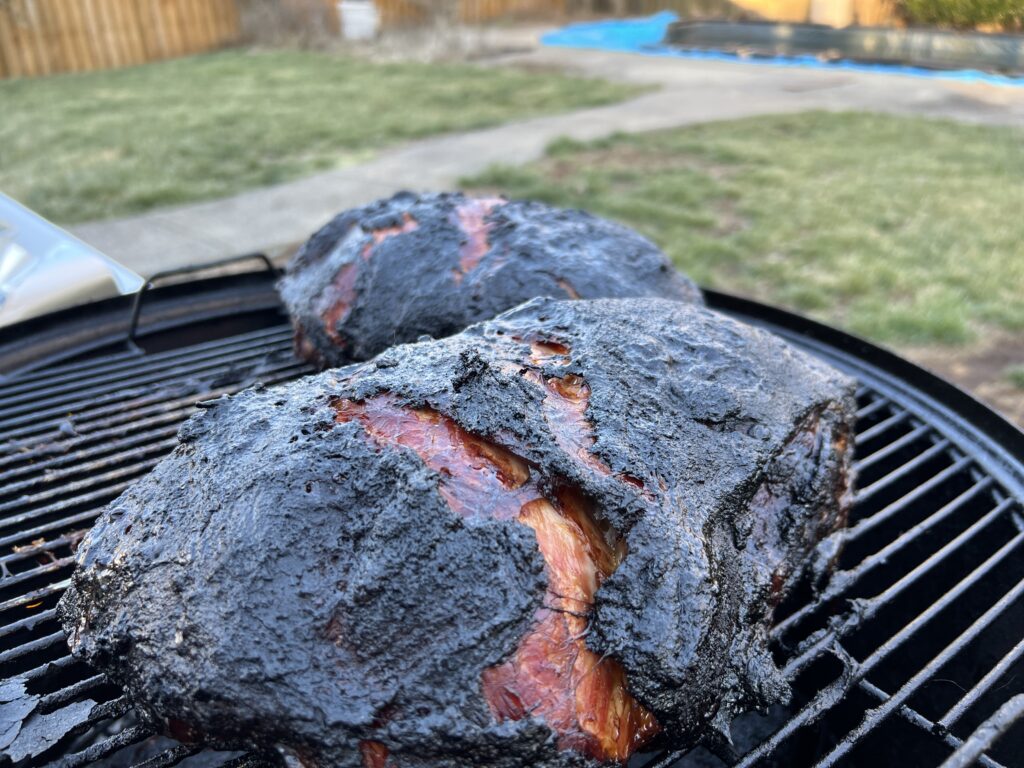
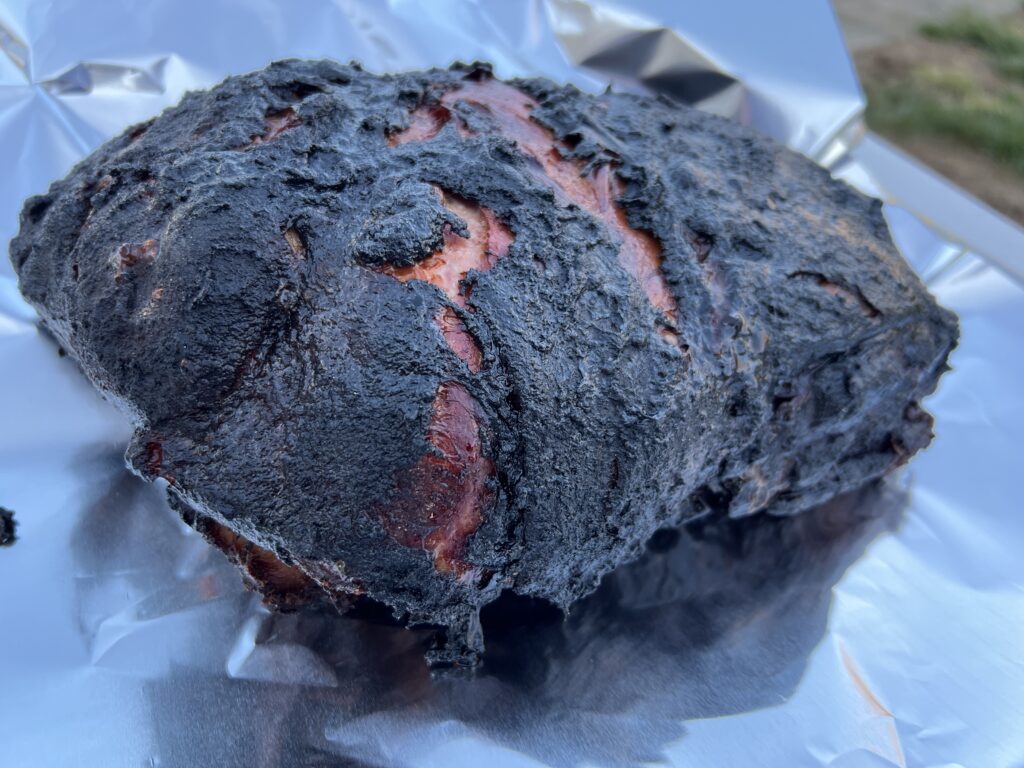
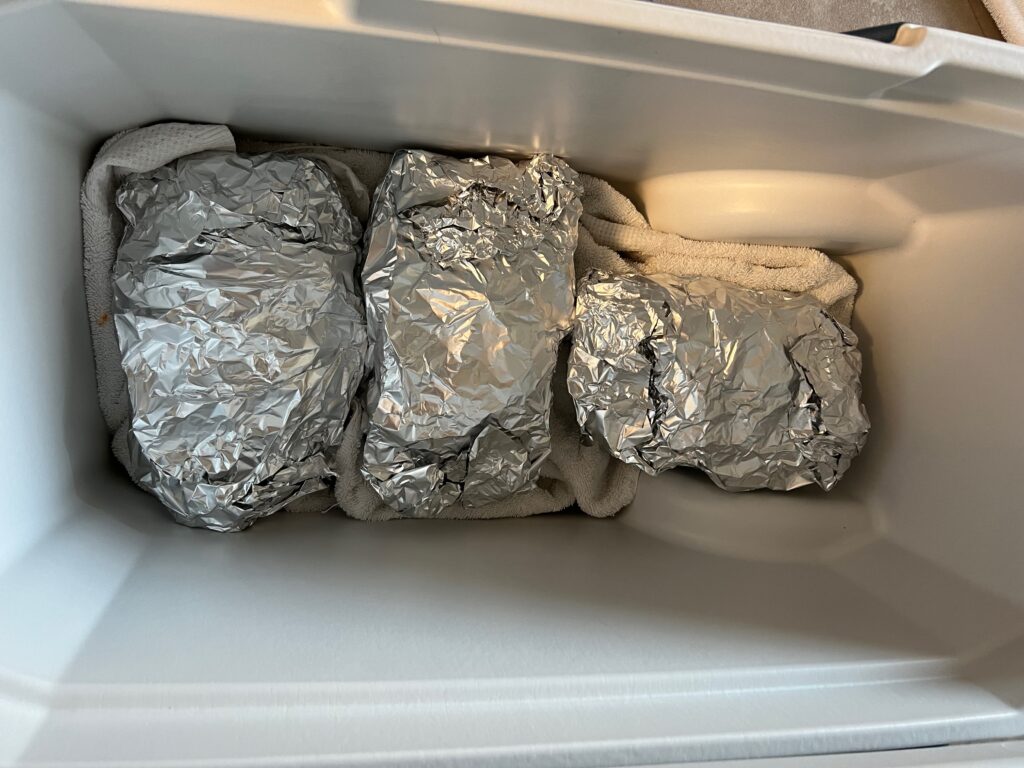
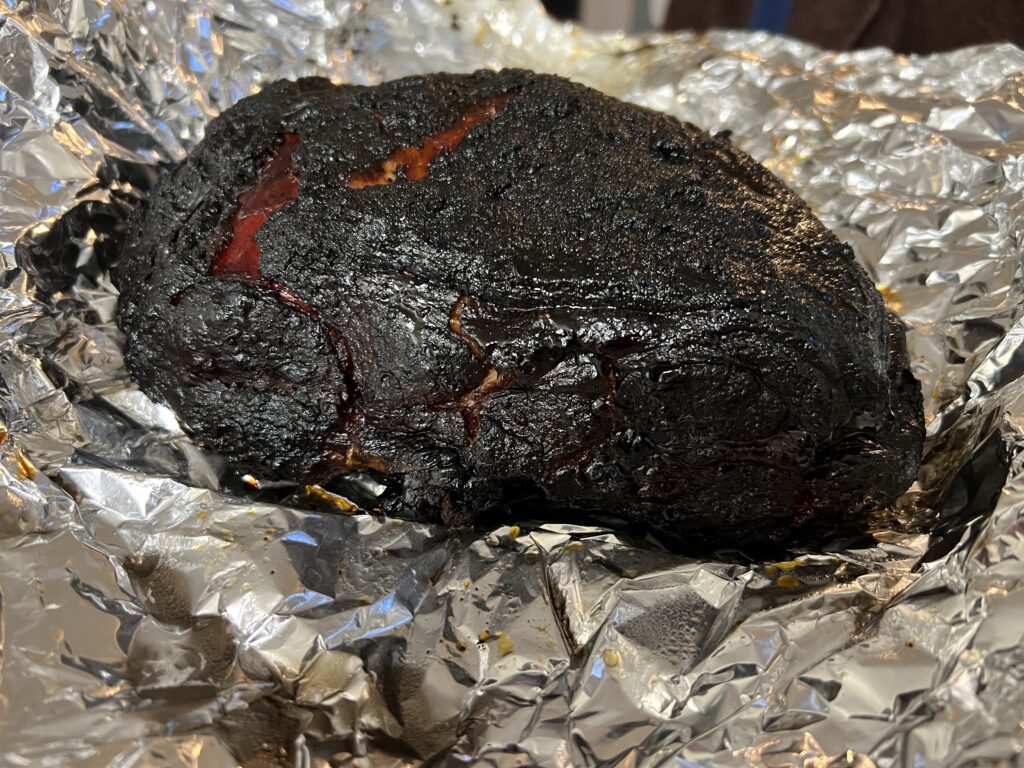
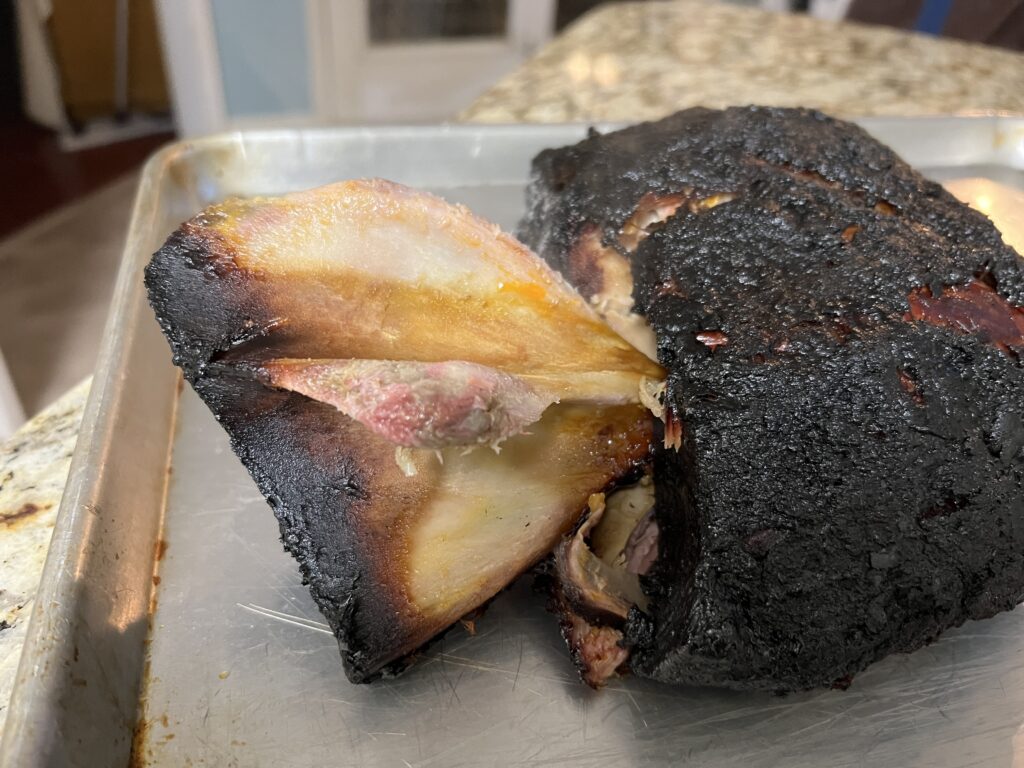
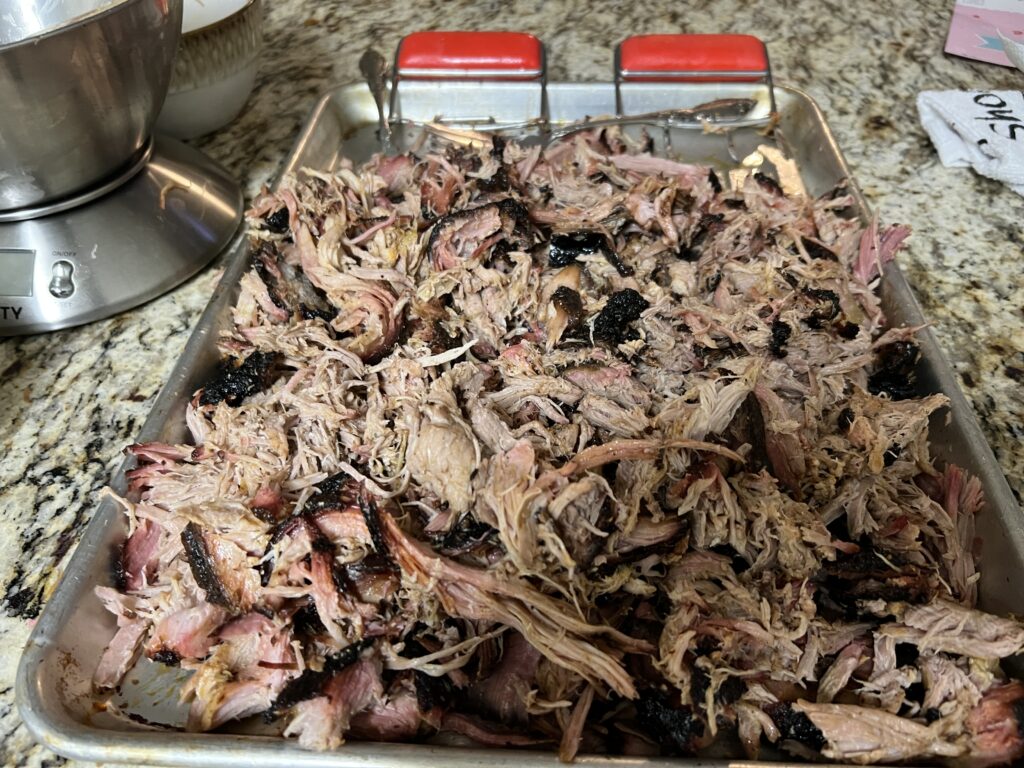
This was 21 hours in, when the three butts on top hit 195°F. The aroma at this point was incredible. I pulled them, wrapped them, and set them in the cooler.
Frequently Asked Questions
Can a smoker run unattended overnight safely? Yes — once a smoker like a Weber Smokey Mountain is dialed in with the vents set and the temperature stable, it can hold steady for 8+ hours without needing to be watched, even in freezing weather.
Does cold weather affect an overnight smoke? It can — in this cook, 19°F weather meant the charcoal didn’t last quite as long as it would in mild weather, requiring one mid-cook refuel. Planning for a possible refuel is a good idea any time temperatures drop well below freezing.
Do you need to babysit a Weber Smokey Mountain overnight? No — once temps stabilize, checking in periodically (or using a wifi thermometer to monitor remotely) is enough. This cook ran unattended from 10 p.m. to 6 a.m. without issue.
How long can pork butt smoke unattended? In this case, roughly 8 hours passed overnight without any intervention at all, and the full cook ran 21 hours total with just one mid-cook charcoal refuel.
For the full rundown on how I approach pork butt from start to finish, see The Complete Pork Butt Guide