This cook had some extra weight to it: it was the first smoke on a replacement 22″ Weber Smokey Mountain, bought after a garage fire took out my previous smokers a few years earlier. I’d been watching Facebook Marketplace and Craigslist for months — during the pandemic, even used WSMs were hard to find — and finally scored one, about 6 years old and in great shape, for $150 against the $549 list price. I added the upgraded door and charcoal basket from Cajun Bandit for $94, so I ended up with a great smoker for under $250 total. I gave it a fresh burn to clean it out, ran a smaller test smoke of chicken and sausage with no issues, and then it was time to see what it could really do: six pork butts at once, for a crowd.
Like most large smokes, I plan them out in advance. I bought 6 pork butts and watched the weather closely. I prepped the pork ahead of time — trimming the large fat cap, then seasoning all six with garlic powder, paprika, salt, pepper, and turbinado sugar, about 24 hours before they hit the smoker. For a long smoke like this, I prefer no rain in the forecast, so I chose a Thursday overnight and started the smoker at 7:30 p.m. I filled the bottom with a layer of charcoal, added several chunks of hickory, then more charcoal on top, lit a full chamber, and dumped it in along with a bit more hickory for immediate smoke.
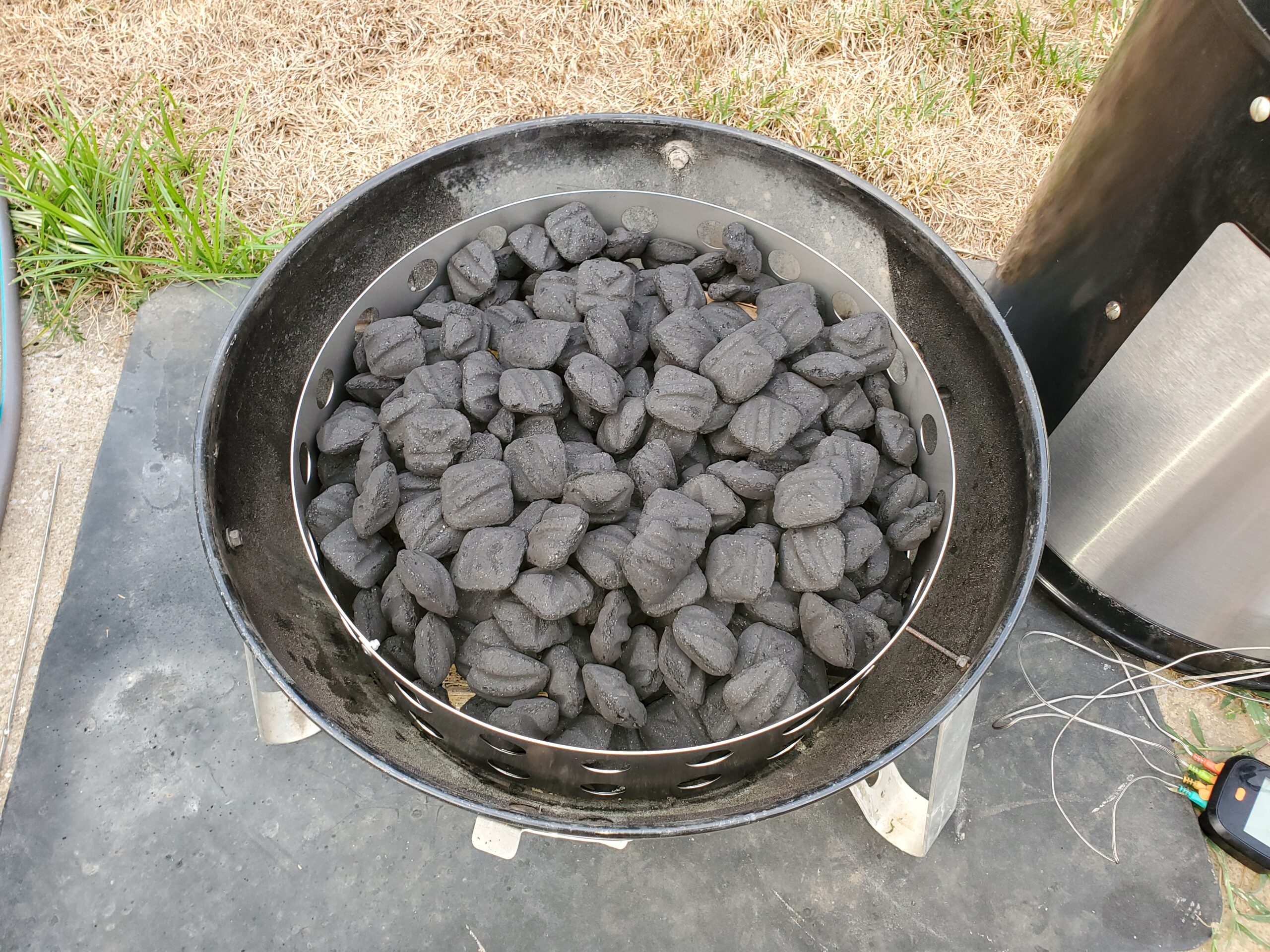
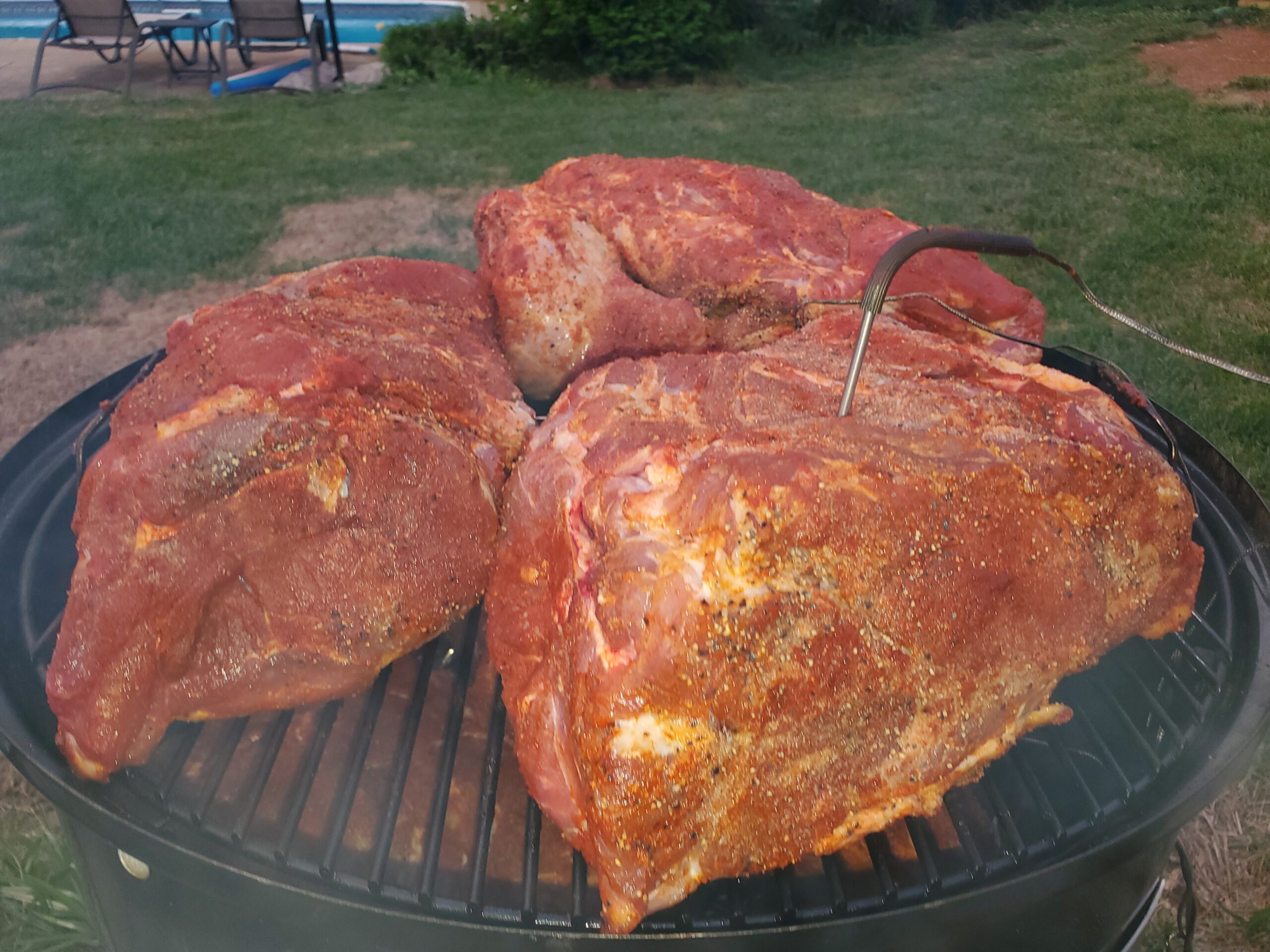
I’ve refined this process enough that the Weber Smokey Mountain is close to set-and-forget. The smoker uses a water pan, which acts as a heat sink and helps stabilize temps. After going over a decade with no electronics, I added an Inkbird 4-probe wireless temp gauge — one probe on each grate, and one in a butt on each. My target is around 225°F, though I’m not concerned if it drifts up to 250°F. The WSM has 4 vents total: the top stays wide open the whole cook, and the three bottom vents control airflow. To start, I leave one bottom vent half open and the other two closed.
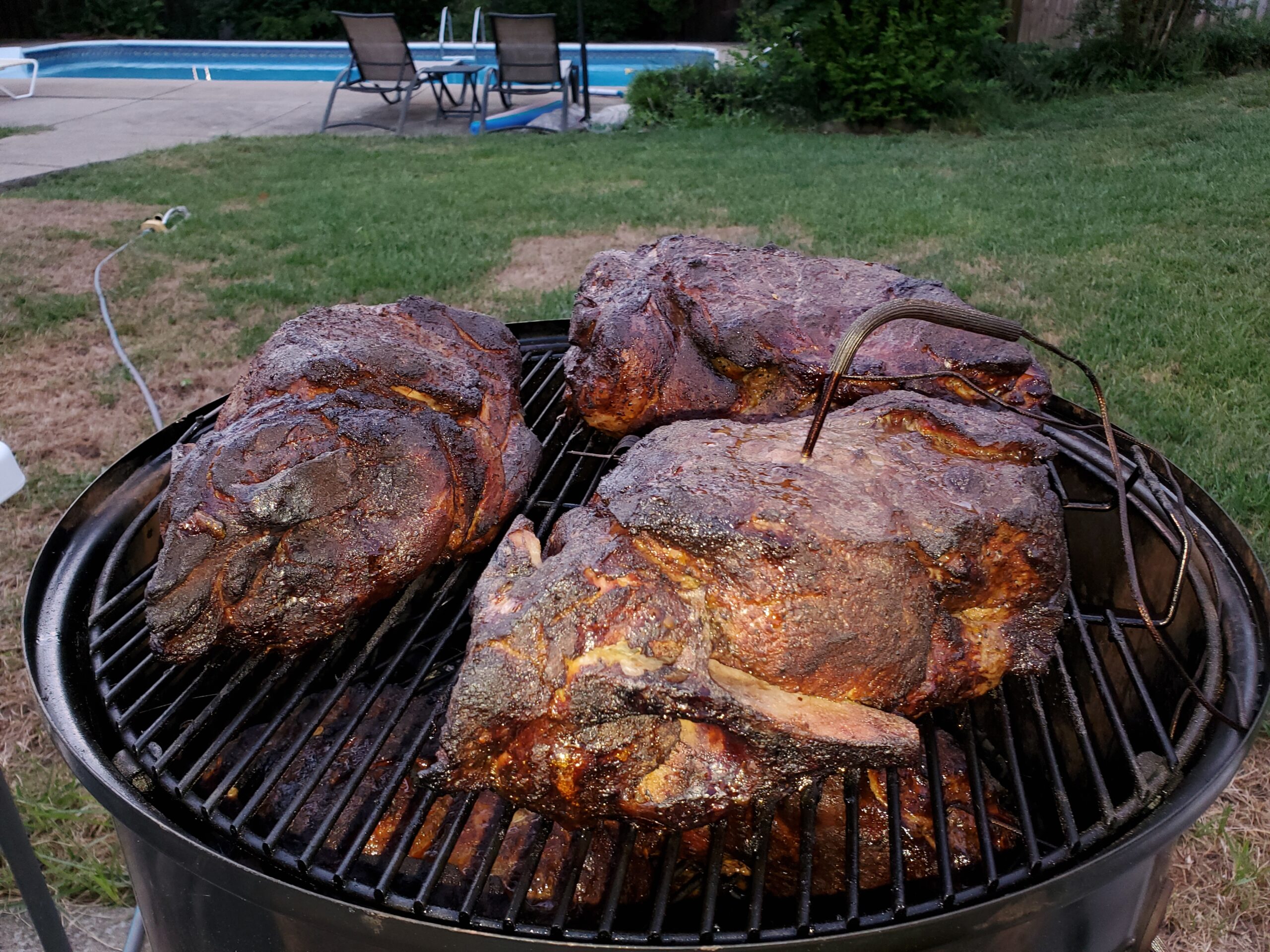
I monitored the temp from the Inkbird and went to bed. I was up about 5:30am and pulled the cover and took a look. Pork was doing good, aroma was great it was now on for 10 hours.
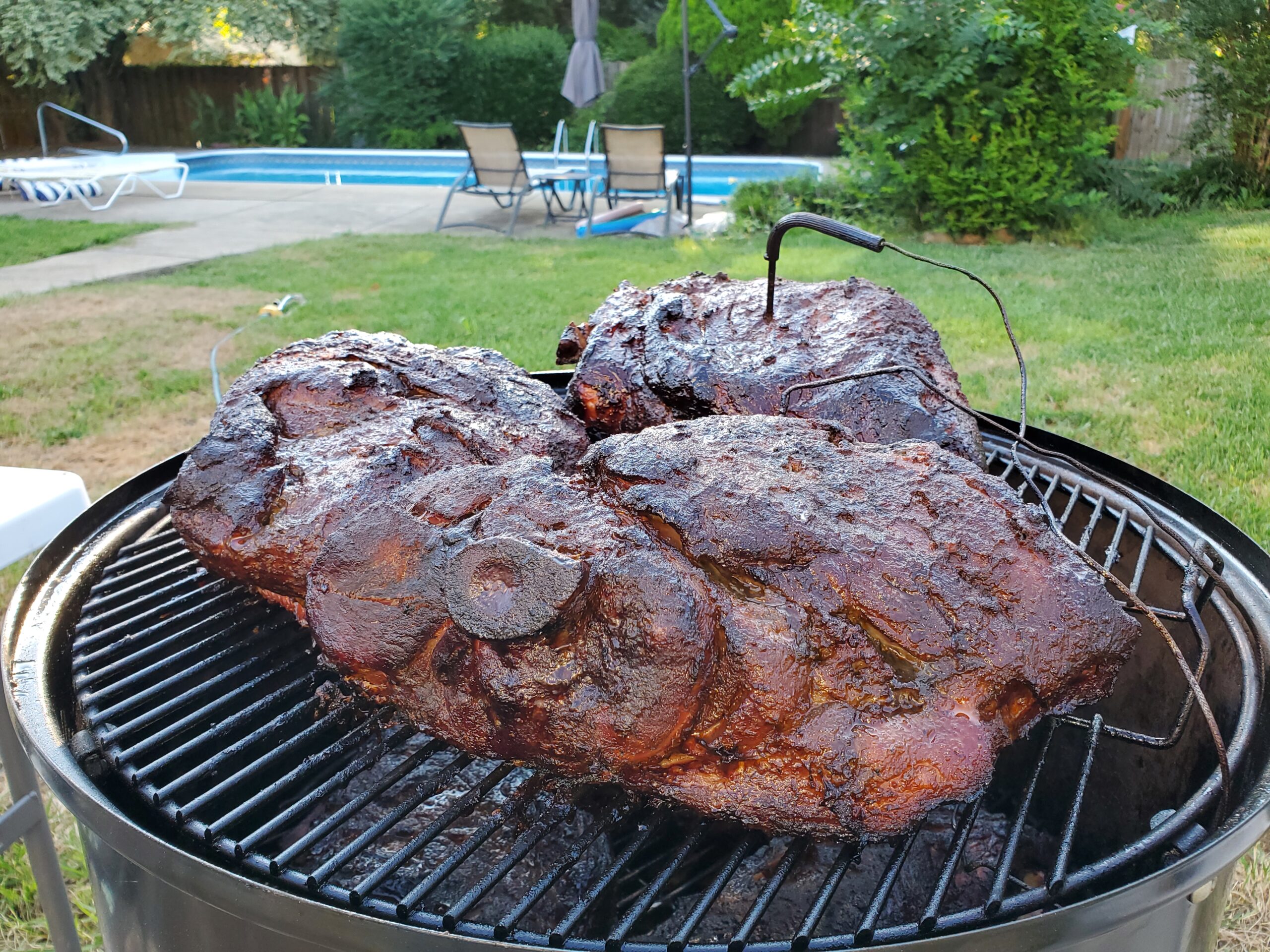
When using both grates, I also rotate the products, so I move the three on the bottom rack to the top and the 3 on the top to the bottom. One unique thing that I do with pulled pork is spritz with purple grape juice. This helps the bark creation and and the color of the finished product. I continue to spritz every 60 – 90 minutes until they are removed.
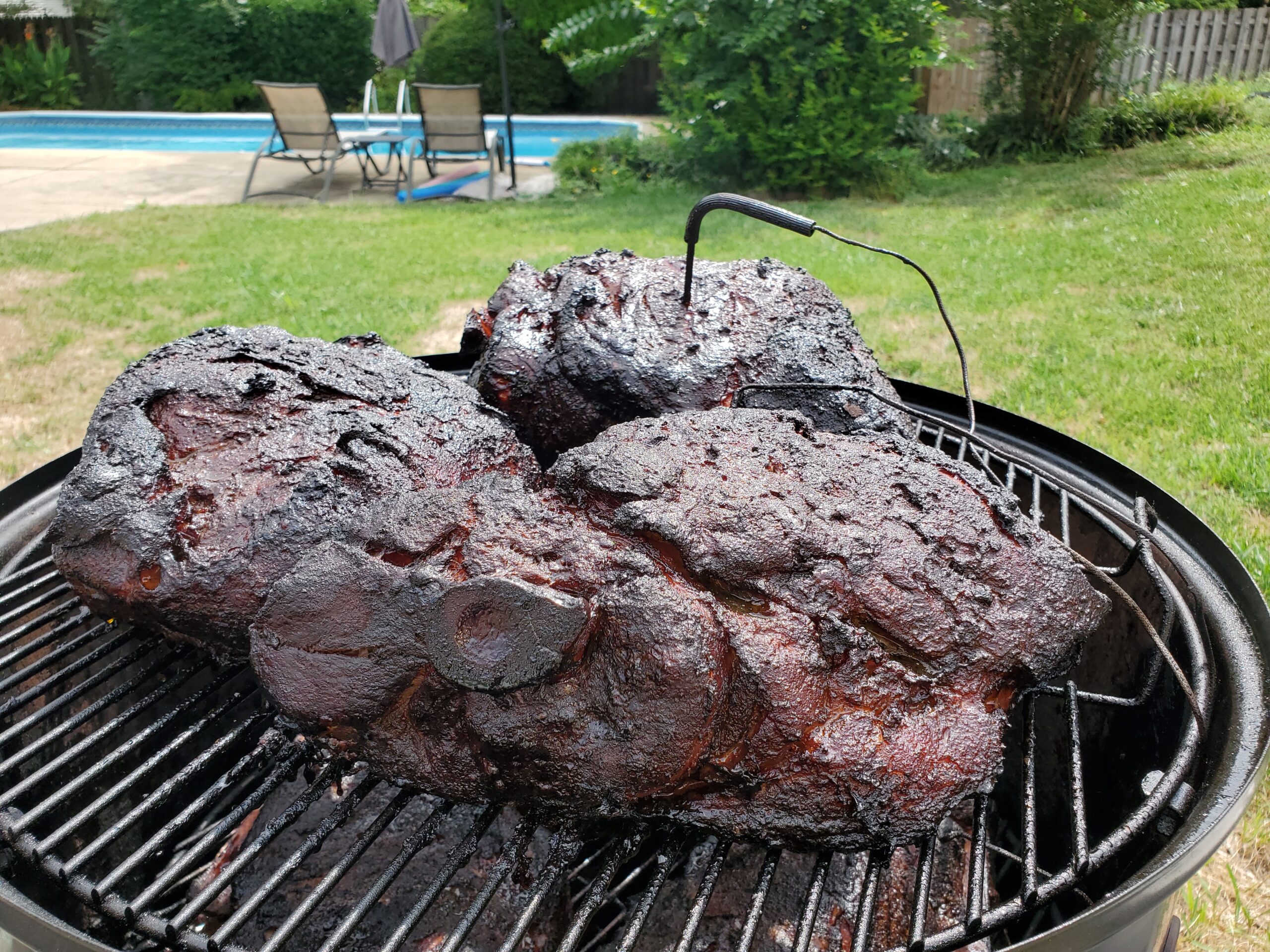
I kept an eye on both the pork and the weather. Rain had been forecast for 3 p.m., but by shortly before 1 p.m. the sky had already gone dark. I scrambled to pull all six butts off the smoker and get them into the house before the rain hit — they’d already taken on excellent color and bark by that point.ntil the butts come off.
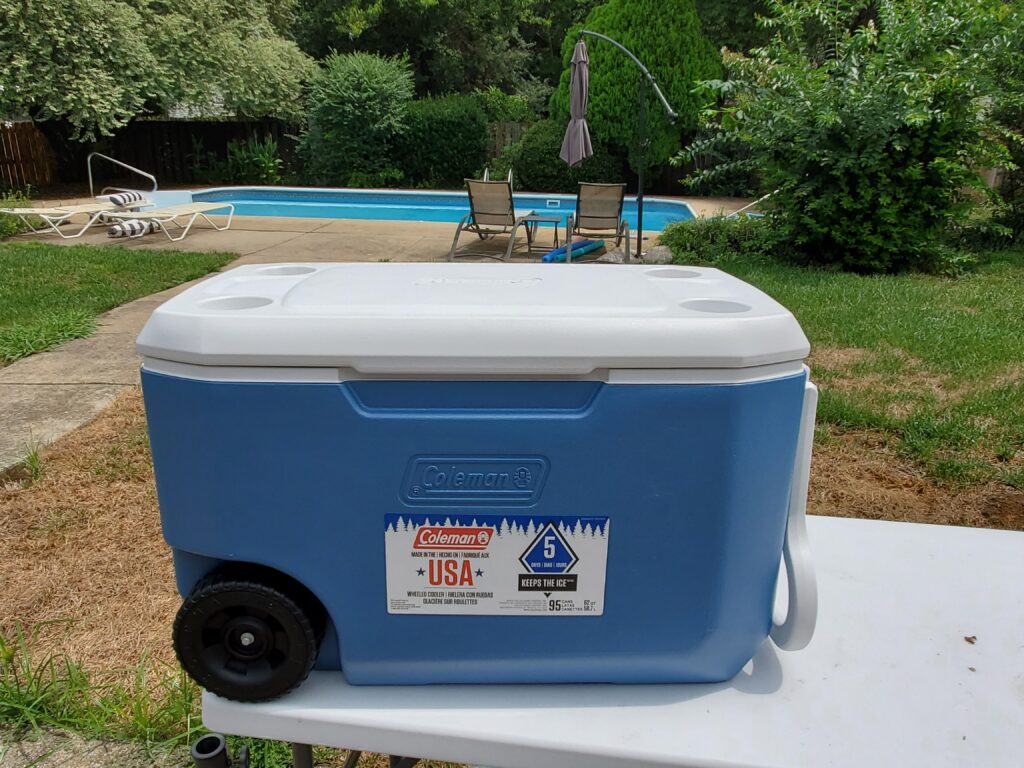
The rest after coming off the smoker matters just as much as the smoke itself. I wrapped each butt in foil and stored them in the cooler with towels. They rested for 5 hours before I pulled the first one — timing can flex down to as little as an hour if you need to eat sooner. Even after the full 5-hour rest, the internal temp was still 165°F. The bone slid out with no effort, and the rest pulled apart just as easily, with a great bark-to-pork ratio.
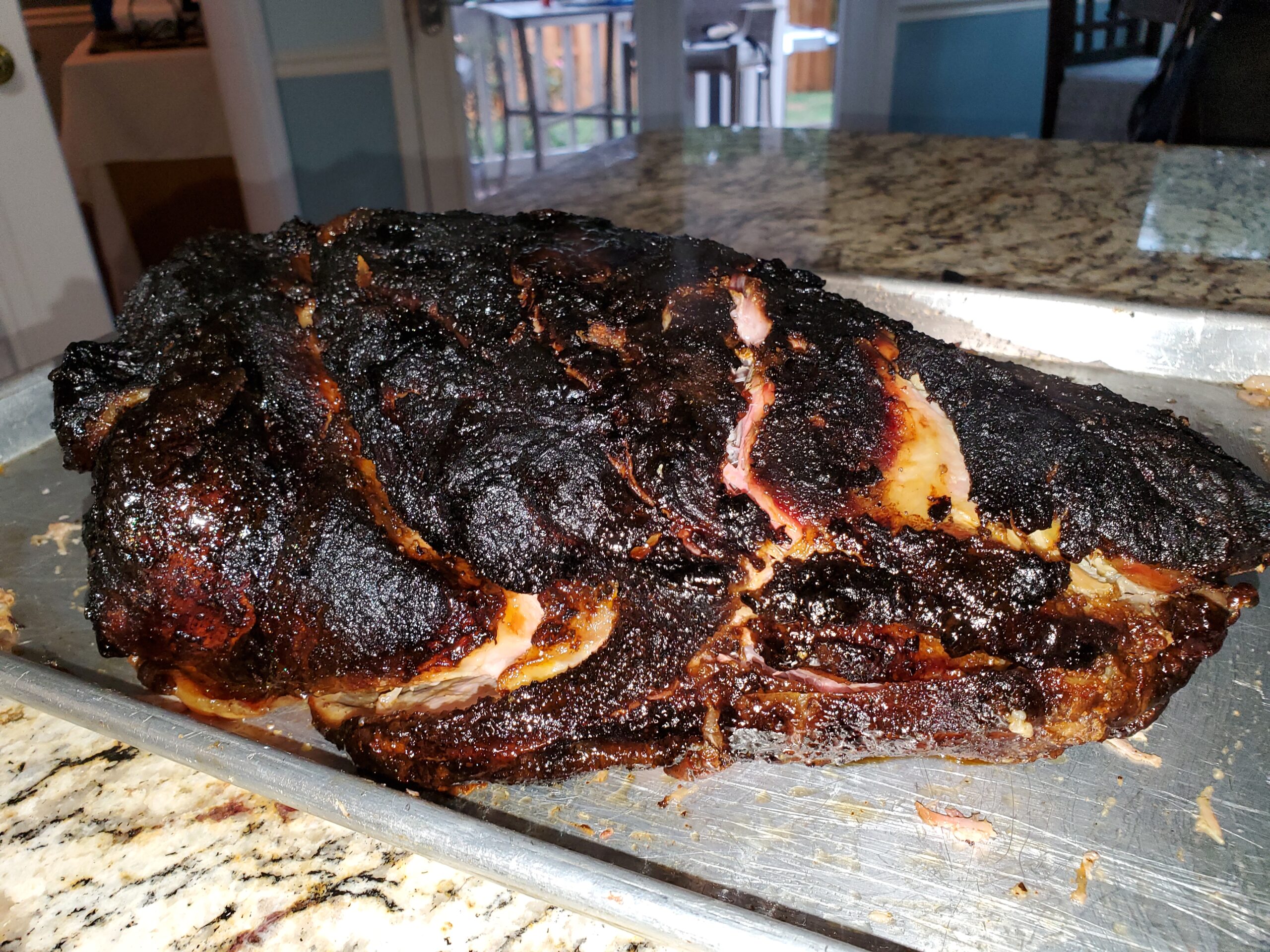
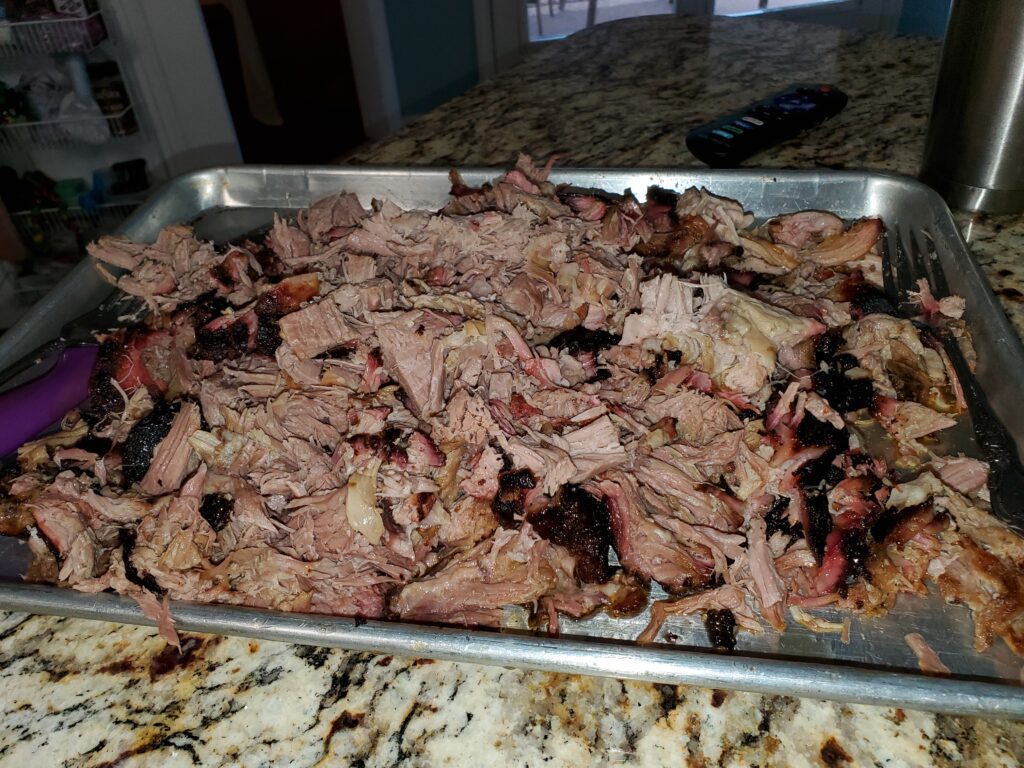
I pulled 4 more of the butts, portioned everything into 1-lb bags, and vacuum sealed them — 21 bags total for later.
Frequently Asked Questions
(new section, add after the last photo)
How many pork butts can you smoke at once? A 22″ Weber Smokey Mountain comfortably handles 6 pork butts across both grates, as long as you rotate them partway through so both racks get even heat.
How do you smoke pulled pork for a large group? Plan ahead — trim and season the butts a day in advance, pick a smoke day with good weather, and budget roughly 16-17 hours total for the smoke plus a multi-hour rest before pulling.
How long can pulled pork rest before serving? Wrapped in foil and held in a towel-lined cooler, pulled pork can safely rest for 5+ hours and still be well above serving temperature — useful for timing a big meal around other prep.
How much pulled pork does 6 pork butts make? This cook yielded 21 one-pound bags of pulled pork after the family ate some fresh, roughly 25+ lbs of finished product from 6 butts.
For the full rundown on how I approach pork butt from start to finish, see The Complete Pork Butt Guide